

Sustainable agriculture
Across continents, young dairy farmers from Indonesia and Switzerland find common ground
Swiss and Indonesian farmers exchange lessons on sustainability, resilience and the future of dairy farming.
18 May 2026
Before sunrise in Neuchâtel, Switzerland, Amélie Cornu begins her day in the dairy barn. At 24 years old, she checks on the cows, prepares feed and moves through routines she has known for years.
The work is demanding, but for Amélie, farming has never been just a job.
“Farming has always been my passion,” she said.
Yet her path into agriculture was not straightforward. Before becoming a dairy farmer, Amélie first trained as a hairdresser. Eventually, however, she returned to the world she felt most connected to: farming. Today, she works on a dairy farm with 50 cows in western Switzerland, part of a younger generation trying to sustain a profession increasingly challenged by rising costs, changing regulations, and social pressures.
Thousands of kilometres away in Indonesia, dairy farmers begin their mornings in much the same way: feeding cattle before dawn, preparing milk for collection, and managing farms before the heat of the day sets in.
While the landscapes and production systems may differ greatly, young farmers in both countries are navigating many of the same questions about productivity, sustainability, and the future of agriculture.
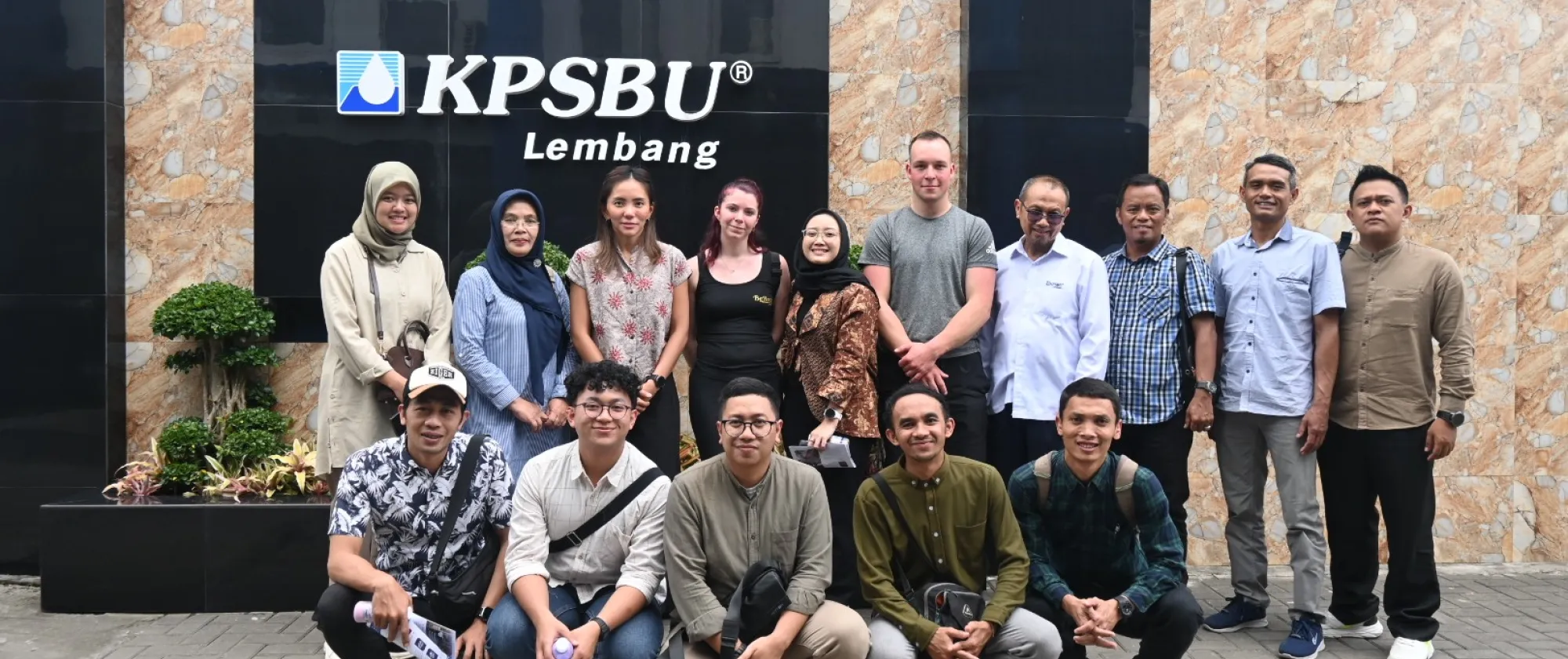
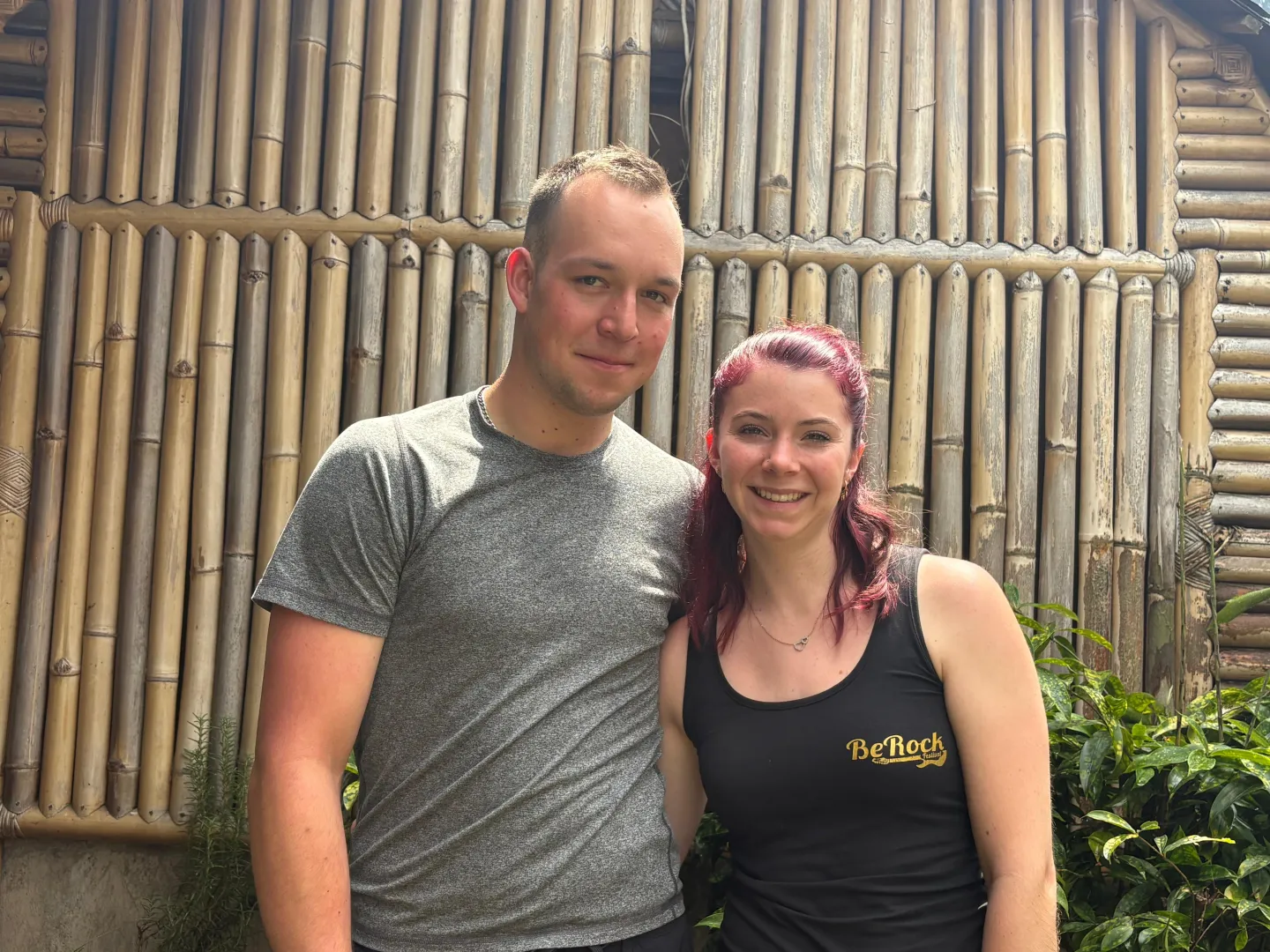
These shared realities became the focus of a knowledge exchange session organized by the ILO’s Promoting SME Enterprises through Improved Entrepreneurs’ Access to Financial Services Phase 2 (Promise II Impact) project, bringing together Indonesian dairy cooperatives and two young Swiss dairy farmers, Amélie Cornu and Dylan Baume.
The session aimed to strengthen learning between farmers by sharing practical experiences on dairy production, animal welfare, milk hygiene, feed management, and digital farm technologies. But beyond the technical discussions, the exchange became a conversation about resilience, adaptation, and the challenges facing young farmers across countries.
Different systems, shared challenges
Raised in a farming family in Switzerland, Dylan spent much of his childhood around dairy cows before his family later transitioned into beef cattle farming. He completed training in dairy farming during his apprenticeship and now works occasionally on dairy farms while continuing to help on the family farm.
Like many young farmers in Switzerland, Dylan has seen how difficult it is becoming for younger generations to remain in agriculture.
“In Switzerland, it’s becoming harder for young people to establish themselves in farming,” he said. “If you don’t inherit a farm, it’s very difficult.”
Across Europe, agriculture faces a growing generational challenge. Young people are leaving rural areas, while rising operational costs and demanding working conditions discourage many from entering the profession. Switzerland is no exception.
Long working hours, strict regulations, and unstable income make farming increasingly difficult, even in one of the world’s most developed agricultural systems.
For Indonesian participants, the exchange offered insights into Switzerland’s highly productive dairy sector, where milk yields can reach up to three times higher than in Indonesia.
“In Switzerland, we rely on consistent government support and strong farm management practices to maintain high standards and productivity,” Amélie explained.
“Digital tools help us manage our farms more effectively, but it is this combination of support, discipline, and good practices that ensures long-term sustainability.”
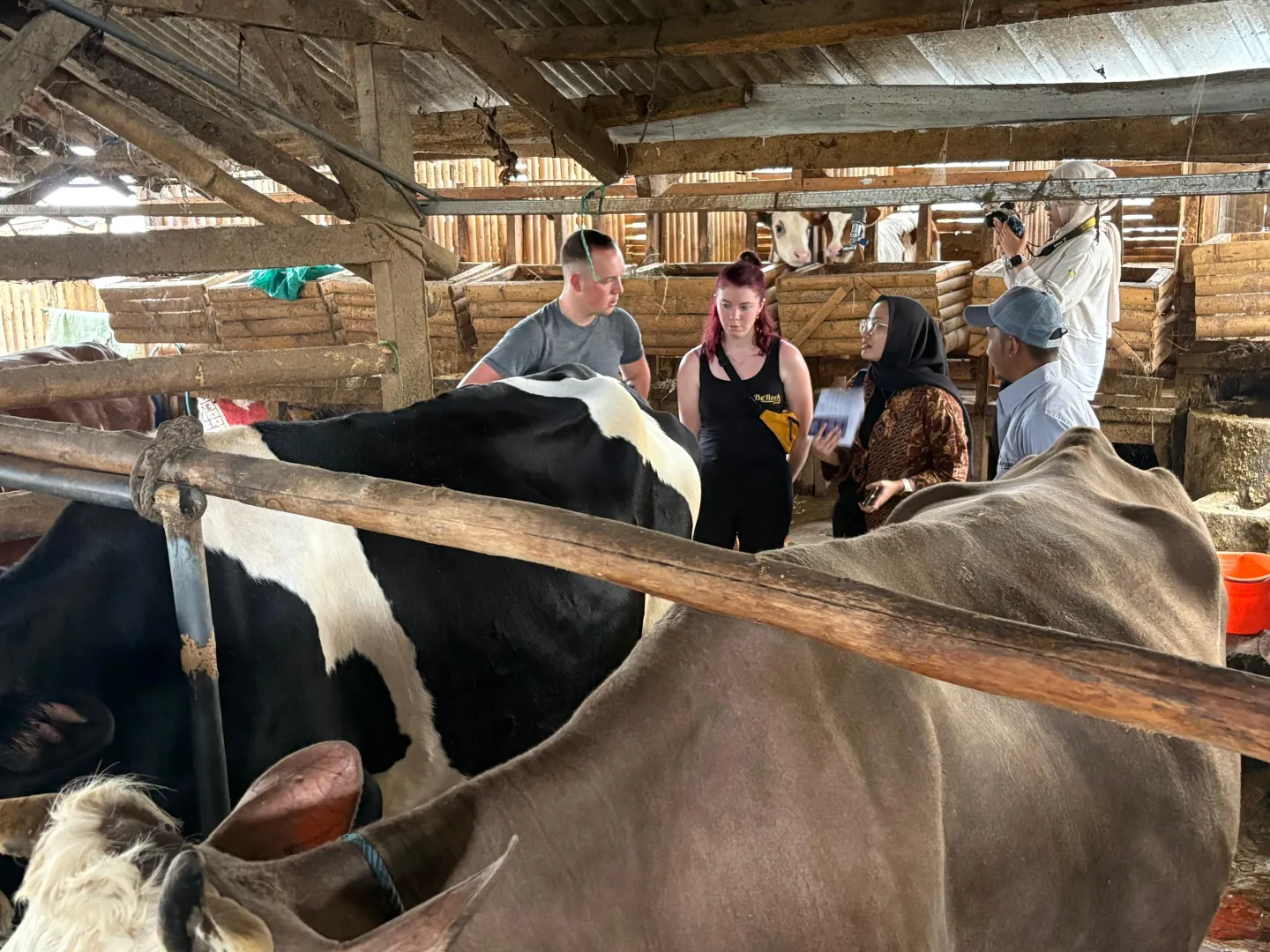
On the dairy farm where Amélie works, digital systems monitor production, animal health, feeding patterns, and milk quality. Sensors and automated systems help farmers quickly detect problems and improve efficiency.
For Dylan, one of the biggest differences he observed in Indonesia was the limited access to technology and feed resources.
“The fact that farms do not always have land to produce feed for their animals was very surprising to me,” he said.
In Switzerland, cows commonly graze outdoors or consume forage produced directly on the farm. By contrast, many Indonesian dairy farmers rely on purchased feed and manual systems, increasing labour demands and production costs.
Learning beyond technology
Animal welfare also emerged as a key topic during the exchange. In Switzerland, strict regulations govern everything from housing conditions and access to water to hygiene standards and veterinary care.
For Amélie and Dylan, improving animal welfare is not only an ethical responsibility but also directly linked to productivity.
“Improving animal welfare is important not only for the animals themselves, but also for increasing production,” Dylan explained.
Amélie added that improving access to quality forage, clean water, and grazing opportunities could strengthen dairy production while improving farm sustainability.
The discussions also touched on the role of women in agriculture. For Amélie, navigating dairy farming as a young woman in a traditionally male-dominated sector remains a challenge.
“The role of women in farming is still a challenge,” she admitted. “Agriculture remains a profession that is often seen as masculine.”
That experience resonated with some Indonesian participants, particularly women involved in dairy cooperatives and household farm management.
Despite the differences between the two countries, both Swiss farmers were impressed by the openness and motivation of the Indonesian farmers they met.
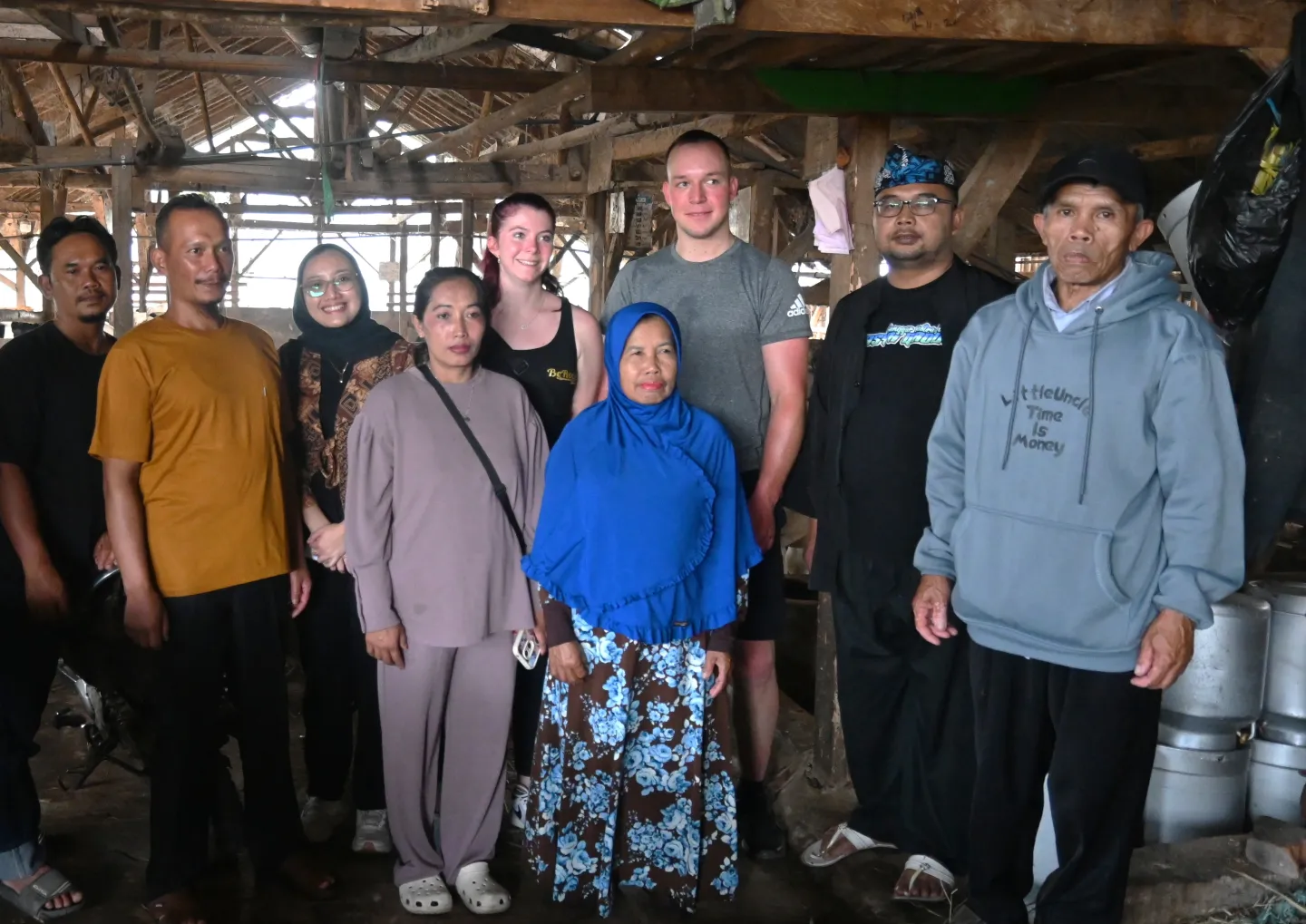
“They were very interested in exchanging ideas and learning about different ways of farming,” Dylan said.
As conversations continued, the knowledge exchange gradually became less about comparing countries and more about recognizing shared experiences.
The Indonesian farmers gained insights into systems that support Switzerland’s high productivity, while the Swiss farmers gained a deeper appreciation for the resilience of smallholder farmers working with fewer resources and greater limitations.
Building stronger farming communities
The session also reinforced the role cooperatives can play in supporting smallholder dairy farmers.
Amélie encouraged stronger collaboration among Indonesian farmers to improve efficiency and reduce costs.
“I think farmers should collaborate more and support each other,” she said.
Through initiatives such as the Promise II Impact project, the ILO continues to support inclusive and sustainable value chain development by connecting farmers, cooperatives, and industry actors across countries.
For the young farmers who participated, the exchange demonstrated that while farming systems may differ, many of the aspirations remain the same: improving livelihoods, caring for animals, and building a sustainable future for the next generation.
And perhaps that was the most important lesson of the exchange.
While Switzerland may have advanced technologies, automated systems, and higher milk yields, the conversations revealed that successful farming is ultimately built on something far more universal: commitment, adaptability, and community.
Related content
Promise II Impact
Promoting SME Enterprises through Improved Entrepreneurs’ Access to Financial Services

Topic portal
Social finance
Relevant projects
Promise II Impact
Promoting SME Enterprises through Improved Entrepreneurs’ Access to Financial Services