

Formalization and Decent Work
The national roadmap for SME and worker formalization
With a large share of Small and Medium Enterprises (SMEs) and workers operating outside formal systems, this roadmap outlines practical and coordinated actions to support the transition from the informal to the formal economy in Pakistan.
Pakistan’s first national roadmap for SME and worker formalization was developed through consultations with government institutions, employers’ and workers’ organizations, industry representatives and development partners. It frames formalization as a gradual and enabling process rather than a purely compliance-driven exercise, with a focus on strengthening enterprise growth, decent work and access to social protection.
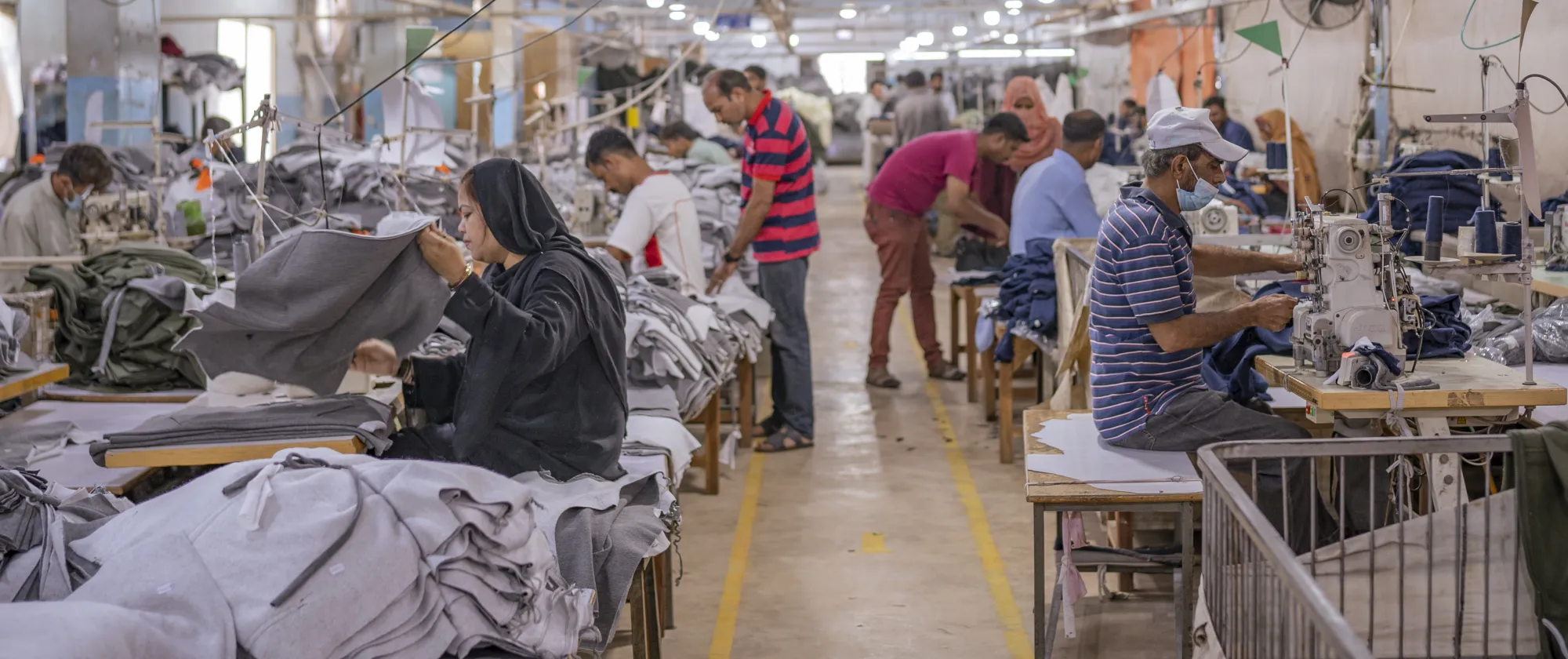
Informality remains a major structural challenge in Pakistan, with a large proportion of SMEs and workers operating outside formal regulatory and social protection systems. Complex procedures, fragmented institutional frameworks, weak enforcement, limited incentives and low trust in public institutions continue to discourage businesses from formalizing. Informality remains particularly widespread in sectors such as textiles, garments, auto-parts, agriculture and home-based work, leaving many workers vulnerable to insecure employment and limited protections.
The roadmap outlines practical and coordinated actions to simplify business registration, strengthen labour administration systems, improve social protection delivery, expand access to finance and business development services, and support women-led enterprises and home-based workers. It also emphasizes stronger coordination between government institutions, employers’ and workers’ organizations and industry stakeholders to promote inclusive and sustainable formalization in Pakistan.
Additional details
Author(s)
- Usman Khan
References
- DOI: https://doi.org/10.54394/00034256
- ISBN Print: 9789220434819
- ISBN Web PDF: 9789220434826