

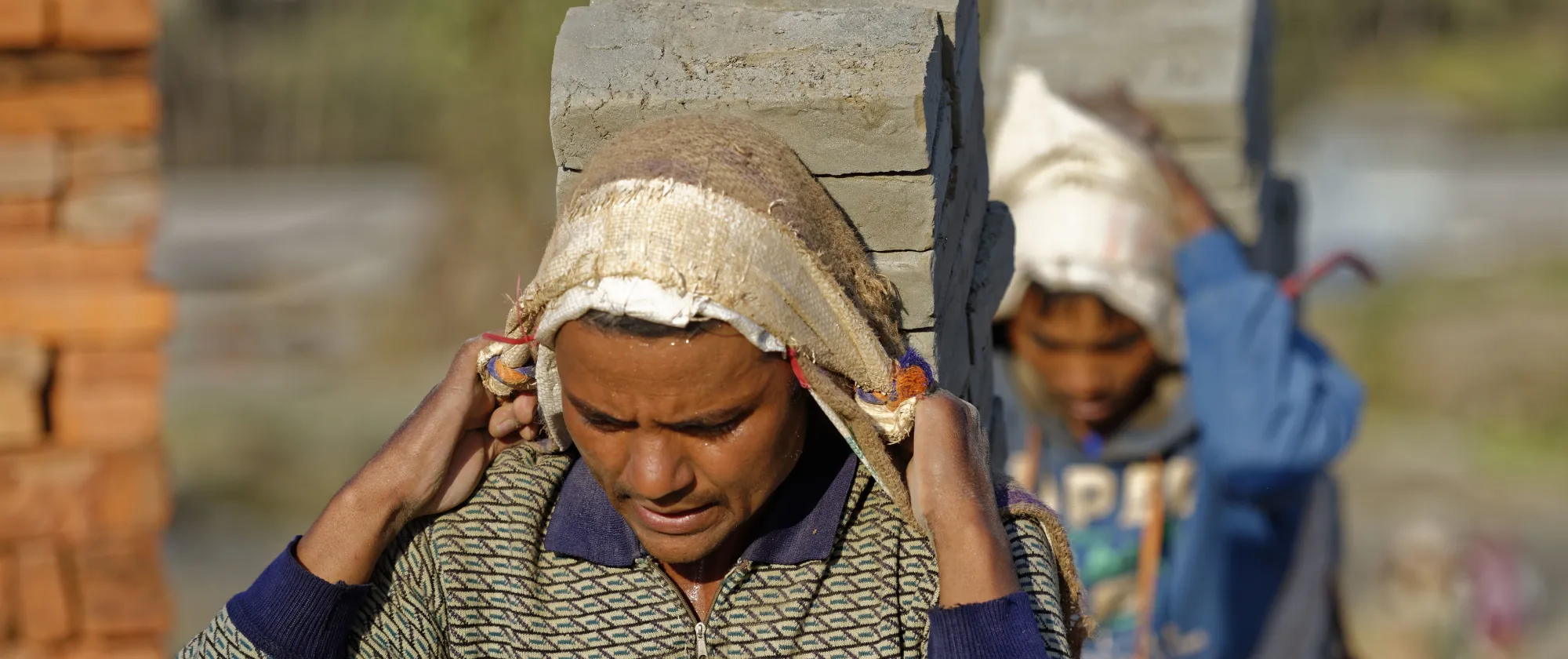
Eradicating forced labour: The ILO approach
This brochure presents the ILO's comprehensive expertise and approach to combating forced labour globally. Drawing on its unique tripartite governance and international labour standards, the ILO offers targeted, evidence-based interventions to address forced labour across sectors and supply chains. It outlines key challenges at national levels – such as legal gaps, weak enforcement, and socio-economic vulnerabilities – and showcases the ILO's support in legal reform, institutional capacity-building, research, and stakeholder engagement. The brochure highlights successful country-level interventions demonstrating the ILO's impact in dismantling systemic forced labour practices and empowering vulnerable populations. Through partnerships, advocacy, and technical assistance, the ILO promotes sustainable, rights-based solutions to eliminate forced labour and trafficking in persons.
Forced labour remains one of the most severe human rights violations in the world of work, affecting an estimated 28 million people globally. It is particularly prevalent in sectors marked by informality, weak regulation, and poor oversight – such as agriculture, construction, domestic work, and manufacturing. Vulnerable groups, including migrant workers and children, are disproportionately affected due to inadequate legal protections and exploitative recruitment practices. Addressing this complex issue requires a multidimensional and sustained response.
The International Labour Organization (ILO), as the only UN agency with a constitutional mandate to develop and supervise international labour standards, plays a central role in the global fight against forced labour. Its tripartite structure – comprising governments, employers, and workers – ensures that its interventions are grounded in both international legal frameworks and national realities. The ILO's approach is guided by key instruments, including the Forced Labour Conventions (Nos. 29 and 105), the 2014 Protocol (P29), and Recommendation No. 203, which together promote a comprehensive strategy encompassing prevention, protection, enforcement, and access to remedies.
This brochure outlines the ILO's expertise and operational strategy in addressing forced labour. It identifies key national-level challenges such as legal and institutional gaps, governance deficits, lack of data, socio-economic vulnerabilities, and crisis-related risks. In response, the ILO provides tailored technical assistance, including legislative reform, institutional strengthening, capacity-building, and action-oriented research. It also supports private sector engagement through due diligence tools and promotes worker protection via access to justice, rehabilitation services, and livelihoods programmes.
The ILO's impact is illustrated through country-level examples, including the elimination of systemic forced labour in Uzbekistan, legal reforms in Qatar, and the empowerment of women in South Asia and Niger. These cases demonstrate the effectiveness of the ILO's integrated approach, which combines legal reform, stakeholder engagement, and evidence-based interventions.
By leveraging its global presence and convening power, the ILO fosters partnerships across governments, businesses, civil society, and international actors. This collaborative model ensures coordinated, sustainable solutions that address the root causes of forced labour and promote decent work for all.
Related content

Topic portal
Forced labour, modern slavery and trafficking in persons