

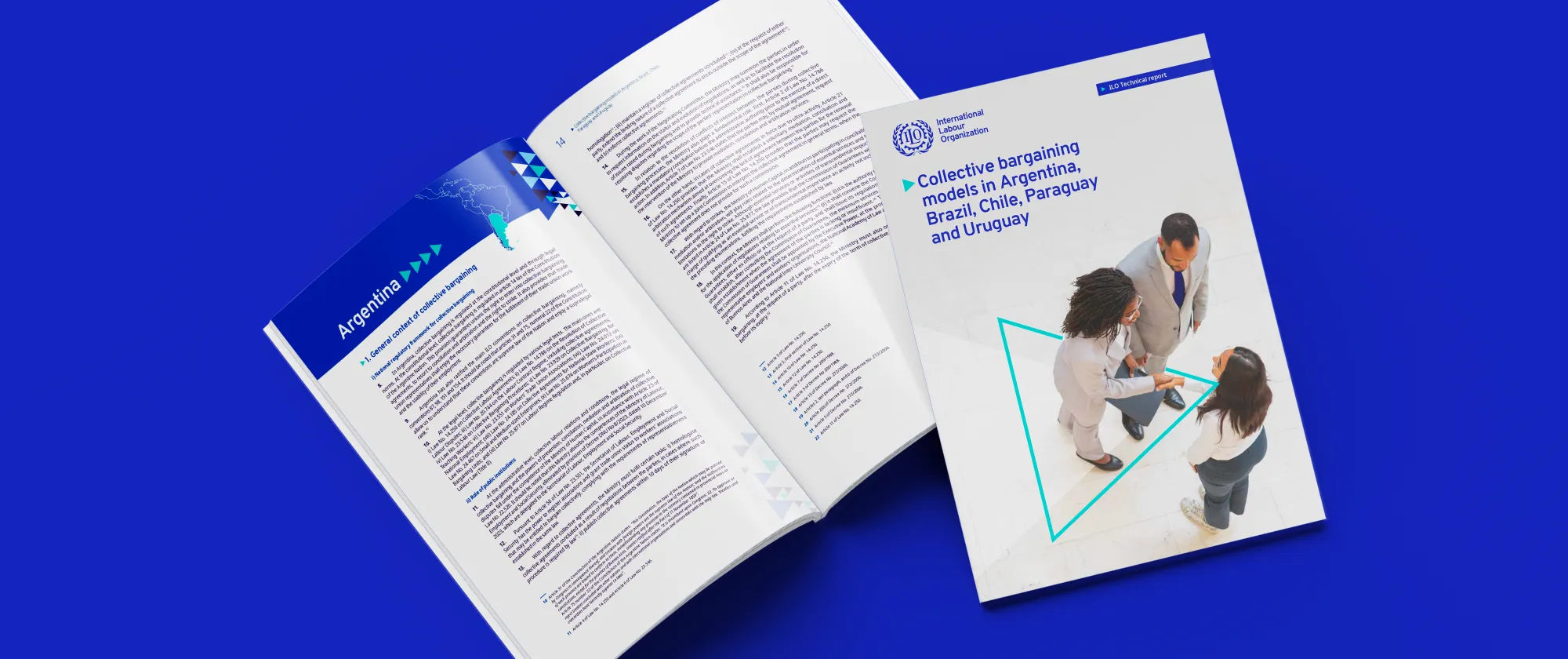
Collective bargaining models in Argentina Brazil, Chile, Paraguay and Uruguay
The study compares collective bargaining systems in the Southern Cone, examining their legal bases and practical functioning, with the aim of identifying good practices that contribute to strengthening labour rights in the region.
Collective bargaining requires the right to unionize as a basis, as the right to form representative organizations that enable negotiation. It also requires the existence of a legal and institutional framework that promotes and establishes the necessary conditions for its development and allows the parties to negotiate voluntarily, freely, and in good faith.
In this context, the document seeks to systematize information on the legal and institutional frameworks that regulate collective bargaining systems in the countries of the Southern Cone of Latin America.
Key aspects of each country's regulations were documented, such as the role of public institutions in collective bargaining, the procedures and mechanisms to facilitate the process, the representativeness of the parties involved in the negotiation and the coverage of collective bargaining, the coordination between collective instruments and labor legislation, the means to prevent and resolve conflicts arising from collective bargaining, and, where available, relevant statistical information on union membership rates and the number of collective instruments concluded.
Additional details
References
- DOI: https://doi.org/10.54394/GJGY6838
- ISBN Print: 9789220419045
- ISBN Web PDF: 9789220419052