

A Systemic Approach to Strengthen Refugee and Host Community Livelihoods in Nepal
The project builds on the initial efforts and engagement of stakeholders of phase 1 to improve the livelihood opportunities of more refugees and host community groups. The project implements market facilitation interventions on both, the demand and supply sides of the labour market, to make markets more inclusive for the refugees and host communities.
Duration
1 January 2024 - 31 December 2024
Development partner(s)
United Nations High Commissioner for Refugees
Reference
NPL/24/01/HCR
Location
Kathmandu
Background
The situation of refugees in Nepal requires innovative and inclusive solutions to address the livelihood needs of both refugees and host communities. Nepal has experienced waves of refugees from Tibet (1959), Bhutan (1990/91), and lately from Myanmar, Afghanistan, Pakistan, and Somalia. Although over 90 per cent of Bhutanese refugees in Nepal resettled in North America, Europe, and Australia between 2007 and 2016, the country still hosts over 6,300 Bhutanese refugees living mainly in Beldangi and Sanischare settlements in Koshi Province, eastern Nepal, and approximately 950 urban mandate refugees from different nationalities in Kathmandu.
The United Nations High Commissioner for Refugees (UNHCR) and the International Labour Organization (ILO) have been promoting private sector development in forced displacement contexts in Nepal since 2020. In 2021/2022, they developed a market systems assessment in Koshi Province, identifying sectors with potential for inclusive growth and employment for Bhutanese refugees and host communities. Using the Approach to Inclusive Market Systems (AIMS), developed in 2013 with UNHCR, they designed market-based livelihoods interventions.
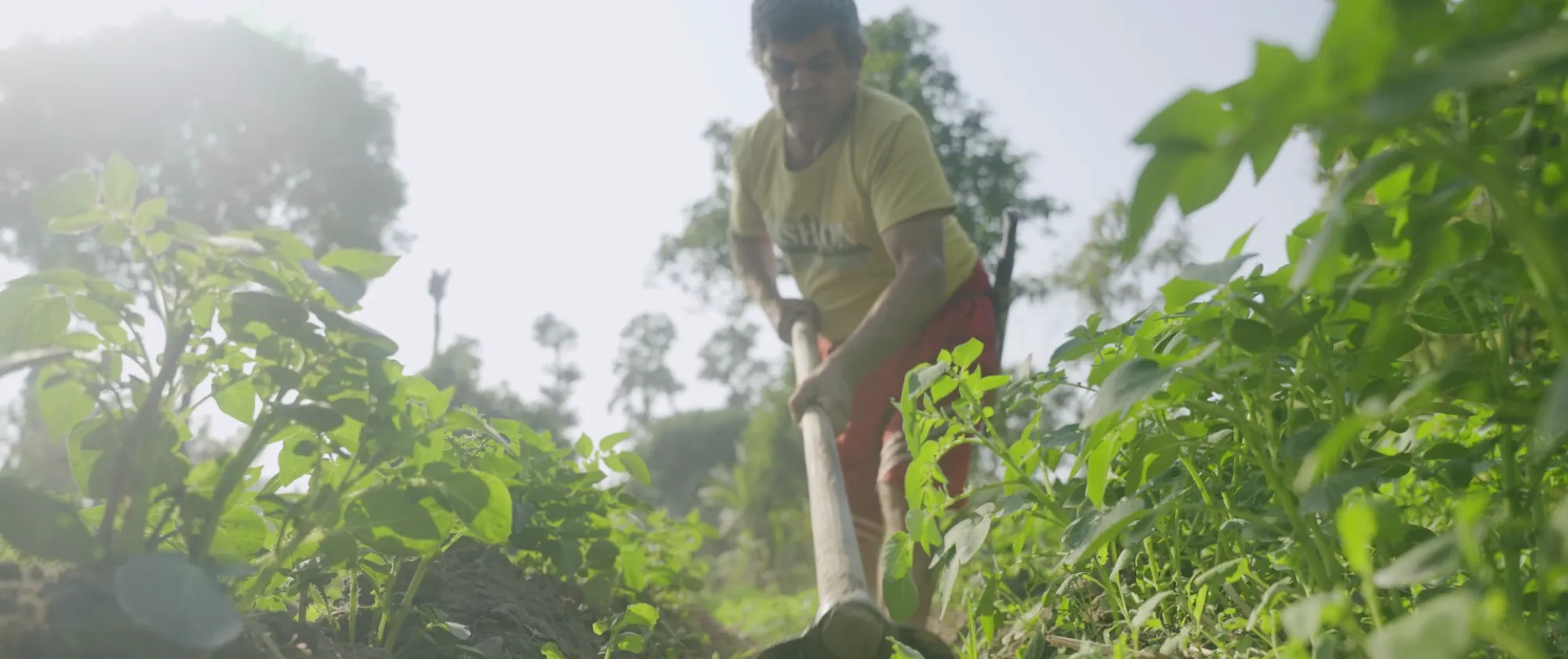
In 2023, over nine months, key market facilitation interventions under the Building Inclusive Markets for Refugees and Host Communities Project were implemented. One intervention addressed systemic constraints for refugee and host community farmers in the potato subsector. This focused on issues related to access to agricultural land, high-quality seeds and fertilizers, and postharvest facilities, technologies, skills, and support services, which were causing significant losses and reduced income from produce. A total of 60 individuals (28 refugees and 32 host community farmers, 33 per cent women) benefited from land lease, advisory support, a voucher programme (providing high-quality potato seeds and fertilizers), and extension services, including a farmer field school and training on commercial vegetable farming and marketing. This intervention engaged multiple local actors such as the Mansarowar Agriculture Cooperative, the Economic Empowerment Centre, and local agrovets.
Another main constraint identified was the lack of entrepreneurship skills among refugees and host community members, crucial for meeting commercial market demands. Refugee and host community members generally lacked access to training and other business development services, with few available Business Development Service (BDS) providers catering to them. To address this, a 2023 intervention developed
the capacity of institutions and entrepreneurs in the ILO’s SIYB programme. The programme, focusing on starting and improving small businesses to create better employment, trained 20 trainers (including 3 refugees, 30 per cent women) from Damak and nearby municipalities. These trainers subsequently trained 93 potential and existing entrepreneurs (including 40 refugees, 60 per cent women).
Together, the two interventions successfully improved livelihoods of 664 Bhutanese refugees and host community livelihoods in Damak.
Following the 2023 interventions, UNHCR and ILO launched the second phase of the project titled: A Systemic Approach to Refugee and Host Communities Livelihoods in Nepal Project.
The second phase of the project has three key objectives:
1. Improve and scale up market-based livelihood interventions for Bhutanese refugees and host communities in Koshi Province (Beldangi refugee settlement in Damak/Jhapa district and Sanishare refugee settlement in Patri-Sanishare/ Morang district).
2. Explore new high-potential sectors of intervention in Koshi Province within around 75 km radius of the two Bhutanese refugee settlements in line with market trends and employers’ demand.
3. Provide technical support to UNHCR Nepal and partners in the implementation of sustainable livelihood interventions for urban mandate refugees in Kathmandu.
For further information please contact:
Mr Deep Rana
National Project Coordinator
Email: [email protected]

Project updates
A Systemic Approach to Refugee and Host Communities Livelihoods in Nepal