

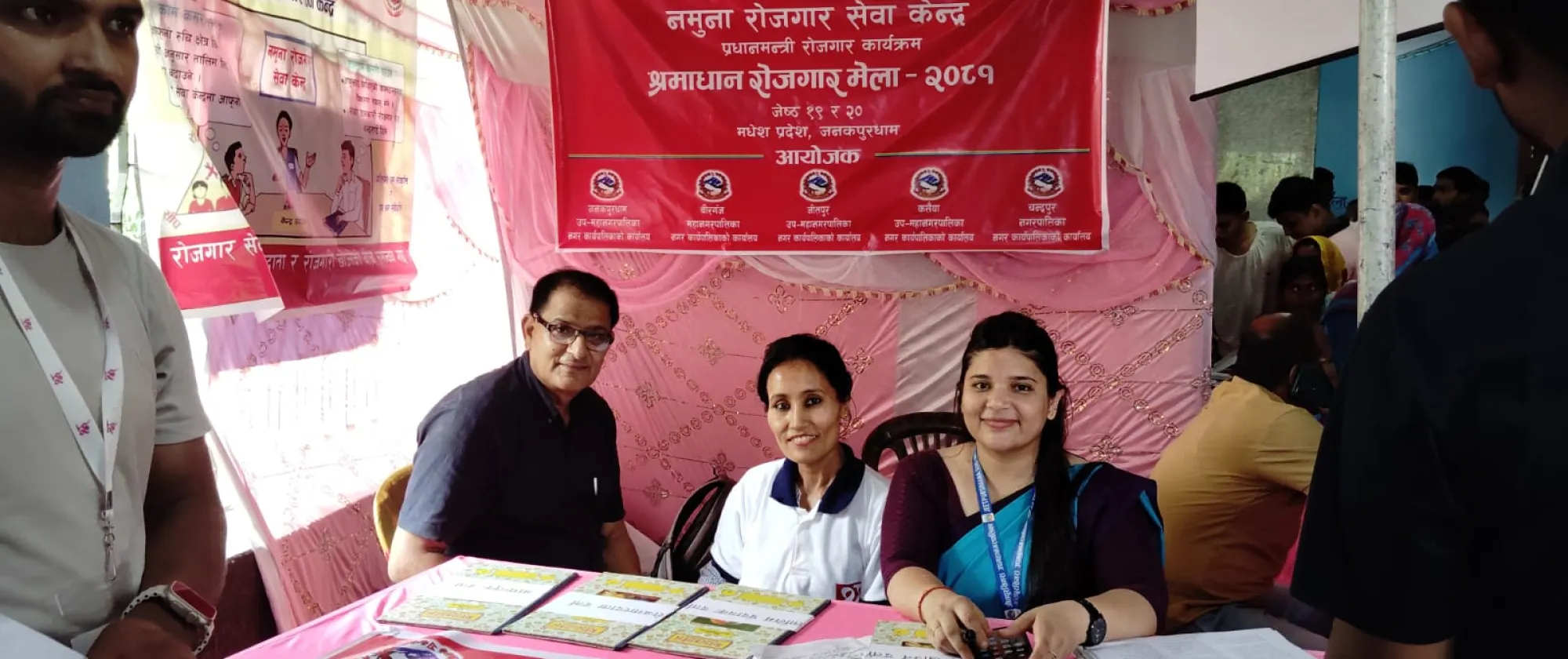
Strengthening of Employment Service Centres in Nepal (SESC)
The project aims to strengthen Employment Service Centres (ESCs) to deliver the full mandate of the centres, while supporting the government at the federal, provincial and local levels to further develop the policy and institutional framework of the public employment service (PES), improve the engagement of ESCs with key stakeholders, including the private sector, and support the capacity building for fully functioning and sustainable PES, delivered mainly through ESCs at the local level.
Duration
29 November 2022 - 30 November 2026
Development partner(s)
Swiss Agency for Development and Cooperation, Switzerland and the World Bank
Reference
NPL/22/03/CHE, NPL/22/02/IBR
Location
Kathmandu
Background
The Right to Employment Act (2018) implements the Nepal Constitution right to employment provision through the establishment of Employment Service Centres (ESCs) to ensure the right to minimum employment, provide support to the unemployed, collect and maintain information on workers and employers, and provide employment promotion and matching services. The functions of the ESCs as provided for in the Right to Employment Act and the recently published Integrated (Labour and Employment Operational and Management) Procedure, 2023 by the Ministry of Labour, Employment and Social Security (MoLESS) broadly match with ILO Employment Service Convention, 1948 (No. 88).
The ESCs in Nepal were established aiming to provide employment promotion services, such as job matching and counselling, provide referral services, and coordinate the provision of temporary employment programmes. However, their structure and service portfolio do not yet account for the local labour market characteristics, skills, and service needs, nor the demand from employers. Further, their mandate is also to provide services addressing the special needs of (returnee) migrant workers. However, in practice, the functions of the ESCs are restricted to implementing community based public works programmes to create temporary employment opportunities for the registered unemployed. In addition to this, ESCs also have limited capacity to implement their full mandate authorised by both the Act and the Procedure, the latter promoting an integrated delivery of services and thus transforming the ESCs to one-stop shops.
In this context, the development partners the World Bank (WB), UK Foreign Commonwealth and Development Office (FCDO), Swiss Agency for Development and Cooperation (SDC) and International Labour Organization (ILO) jointly agreed to collaborate and extend their integrated support to strengthen Public Employment Services (PES) and ESC functioning for its sustainability in Nepal.
Thus the ILO is providing technical assistance to the Ministry of Labour, Employment and Social Security (MoLESS) through a project “Strengthening of Employment Service Centres in Nepal” to provide support to the Employment Service Centres (ESCs) and expedite the implementation of the employment promotion services by the ESCs, ensure consistent and continuous capacity building for all staff of the ESCs, and support the creation of conditions for the long-term institutional development and sustainability, and strategic placement of ESCs within Provincial and Local Governments.
Project objectives
The SESC project aims to strengthen ESCs to deliver the full mandate of the centres, while supporting the government at the federal, provincial and local level to further develop the policy and institutional framework of the public employment service (PES), improve the engagement of ESCs with key stakeholders, including the private sector, and support the capacity building for fully functioning and sustainable PES, delivered mainly through ESCs at the local level.
This entails improving the service quality and delivery capacity of the ESCs to better serve workers and employers, but also ensuring that the ESCs are supported by a robust institutional framework that ensures the good functioning of the day-to-day activities, but also contributes to making the ESCs a strategic institution on the economic development and employment generation for municipalities and provinces.
Project Outcomes
Outcome 1: ESCs service delivery mechanism is enhanced to provide quality employment services.
- Output 1.1: MoLESS and ESC capacity is enhanced to manage and deliver integrated labour and employment function.
- Output 1.2: Functional capacity of ESCs and their stakeholders is strengthened.
Outcome 2: Three tiers of government have strengthened institutional and operational efficiency to manage improved labour and employment services.
- Output 2.1: Evidence on the institutional, legal and policy framework of integrated labour and employment services and operational development of ESCs and their services is generated and disseminated.
- Output 2.2: ESC’s institutional and operation efficiency, and services are enhanced and operationalized.
Target beneficiaries
Direct Beneficiaries – ESCs’ staff, municipal, provincial, and federal government officials
Indirect beneficiaries - Workers, particularly jobseekers, and employers
For further information please contact:
Mr Tara Prasad Bakhariya
National Project Coordinator
Tel: +977 1 5970424

Project updates
Strengthening of Employment Service Centres in Nepal (SESC)
Related content

Report
Assessment of public employment services and labour market policies in Nepal
Press Release
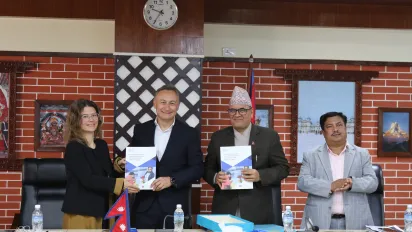
ILO assessment urges Nepal to shift Employment Service Centres from “cash-for-work” delivery to modern job-matching, employer services and...

Press Release
Nepal steps up efforts to strengthen public employment services to tackle youth unemployment and informality