

Skills for an environmentally sustainable transition in Moldova
The project aims at fostering green skills for a sustainable transition in Moldova. The specific activities focus on developing new occupational and qualification standards, curricula, and training programmes to prepare young and adult learners for emerging green job opportunities in the renewable energy sector.
Duration
1 December 2023 - 30 November 2026
Budget
1,681,000 EUR
Development partner(s)
Austrian Development Agency and Lichtenstein Development Service
Reference
MDA/22/02/MUL
Location
Republic of Moldova
Contact
Alessandra Molz, Skills and Employability Specialist and Vera Chilari, ILO National Project Coordinator at [email protected]
The project addresses Moldova's current inadequacies in the Technical and Vocational Education and Training (TVET) system and Life-long learning (LLL) provisions to integrate education for sustainable development and green transition skills.
Moldova's goal of reducing greenhouse gas emissions by 70% and establishing a sustainable economy requires a skilled workforce for the energy sector. However, the existing TVET programmes lack green skills training and fail to align with sector needs, leading to high unemployment and underemployment rates, particularly among youth and women.
The project aims to develop and implement green skills training programmes in Moldova's renewable energy sector, fostering a skilled workforce to drive the green transition and enhance economic resilience.
The direct beneficiaries at system level include the Ministries of Education and Research, Labour and Social Protection, Energy, National Employment Agency, Sector Skills Committee and Social Partners, business associations; at Institutional level include TVET institutions and adult training providers, companies; at individual level include TVET managers and teachers, TVET students, young people and adults (men and women), who shall be targeted by awareness-raising and career-guidance activities, with a specific view to tackling gender stereotypes and adult learners workers, unemployed, informal workers.
The project's implementing partner is the Public Association for the Development of Education, collaborating with governmental counterparts, training providers, and social partners, ensuring multi-stakeholder engagement.
Utilising a participatory approach, the project will conduct sector analysis, develop occupational and qualification standards and curricula, capacitate TVET providers, and integrate green skills into training programmes. Activities include stakeholder consultations, skills anticipation studies, curriculum development, and policy dialogues.
Activities include sector analysis, occupational and qualification standards and curricula development, capacity building for TVET providers, skills development for students and workers, policy support, and awareness-raising campaigns. These efforts aim to create a systemic change in green skills integration and promote sustainable practices.
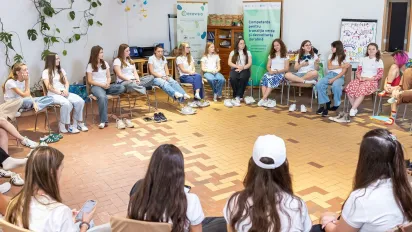
The green transition will not be possible without preparing people with the right skills for it. The discussion of “green skills” needs therefore to be taken to a larger audience. The project will thus engender a National Dialogue on Education and skills for the green transition: Through conferences, expert meetings, youth events and activities with TVET schools, a discussion around the “greening of TVET” shall take place. This will translate into guidance for TVET schools to mainstream sustainable practices in their operations and promote awareness on environmental impact among students of different occupations. The project will seek to support the concept of “Education for Sustainable Development” by reaching out to young people around Moldova and in particular to encourage young women to consider careers in emerging occupations in the renewable energy sector.
The envisioned impact involves strengthening policy frameworks and institutional capacities at the system level, improving stakeholder coordination for green skills development. At the institutional level, it focuses on enhancing training quality and sustainability in TVET institutions. At the individual level, the project aims to empower TVET teachers and students with green skills, enhancing employability and creating career opportunities in the renewable energy sector. At the level of the society, the project seeks to create a better understanding of the importance of skills for the green transition and the career opportunities in the renewable energies sector.
Aligned with Moldova's development priorities, the project supports the green transition, sustainable development goals, and EU accession process. It complements existing initiatives and addresses systemic challenges in TVET and lifelong learning, fostering inclusive growth and resilience.
The project mainstreams gender equality, social inclusion, and MSME support, ensuring participation of disadvantaged groups and promoting sustainable business practices. It engages social partners and leverages synergies with other projects to maximize impact.
Overall, the project aims to equip Moldova with a skilled workforce prepared for the green transition, driving economic growth, and environmental sustainability.
Related content
Just Transition
ILO initiative empowers young women for a greener Moldova
Moldova’s TVET Schools drive the green transition
Our impact, their voices
Powering Moldova’s green future: How skills training opened new doors for a young woman

Video
Powering Moldova’s green future: The story of Ariadna Pralea, Student of Renewable Energy