

Project
Safety + Health for All Plantation Workers in South Asia: Sri Lanka Component
The ILO/Japan project on Safety + Health for All Plantation Workers in South Asia was implemented in the framework of the ILO’s Flagship programme “Safety + Health for All”. The project contributed towards improving the safety and health of workers in plantation sector in South Asia (India, Nepal, Sri Lanka). This page describes the Sri Lanka component under the project.
Duration
1 December 2020 - 31 December 2024
Development partner(s)
ILO/Japan Multi-bilateral Programme
Reference
RAS/20/08/JPN
Contact
Mr Dasun Kodithuwakku, National Project Coordinator
Project background: Sri Lanka
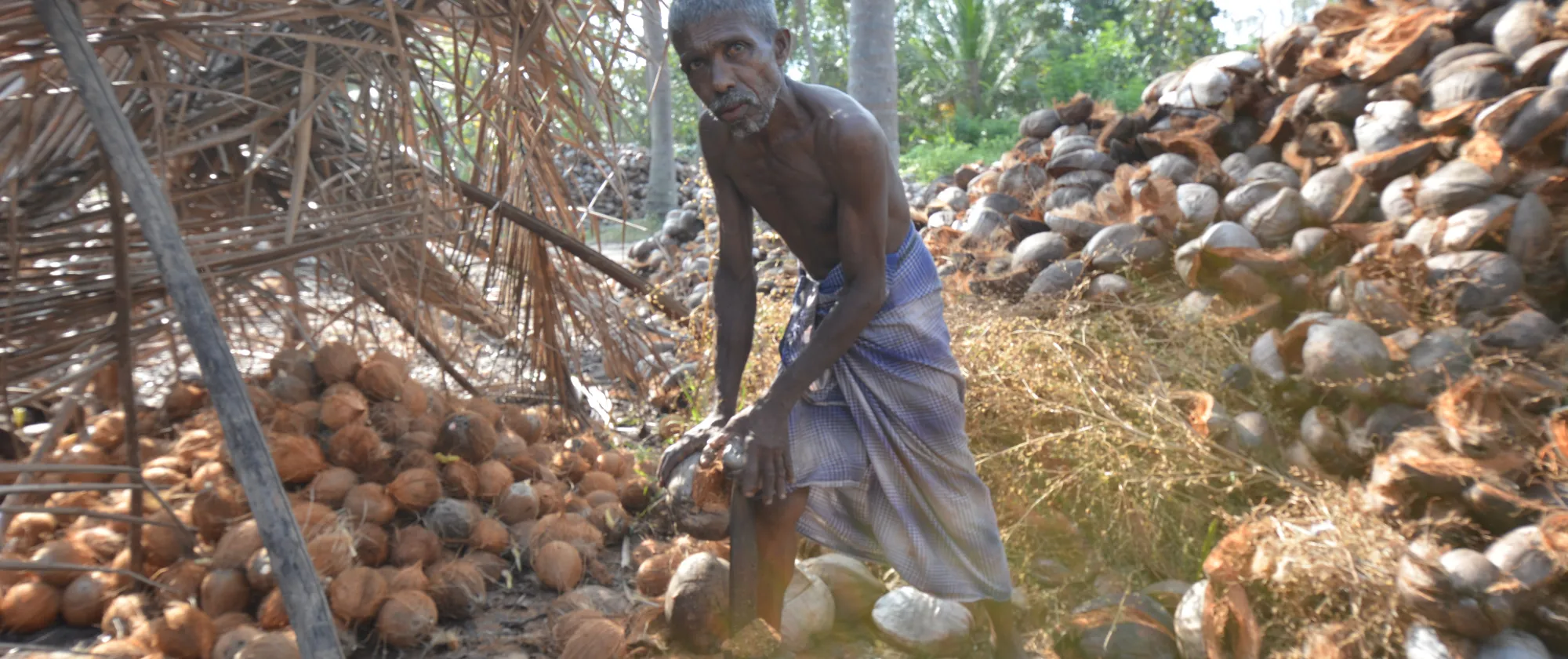
Sri Lanka is a major exporter of plantation crop products such as tea, coconut and rubber. In 2019, tea export earnings were 1,346 million USD; rubber was 24.2 million USD; coconut was 329.5 million USD. The tea sector provides employment for over 2.5 million people. Of this, smallholders cultivate about 60 per cent of the total tea land and account for more than 70 per cent of the total production.
Sri Lanka's plantation industry is the country's single biggest employer providing direct livelihoods to nearly 200,000 people in Regional Plantation Company [RPC] estates alone, excluding employment generated within the majority small holding sector. The rubber industry provides direct and indirect employment opportunities to over 300,000 persons and nearly 75% of them are smallholders.
Workers in tea and rubber plantations run a greater risk of occupational injury than workers in other sectors. The main risks arise from unguarded machinery in factories, exposures to fertilizers, pesticides, and other agro-chemicals. Accidents are also caused as a result of working at high altitudes and on difficult and uneven terrains under difficult weather conditions. Workers also suffer occupational injuries during work, such as insects (including wasps) and leech bites and cuts from tools. Leopards’ have become a threat due to encroachment into their natural habitat and abandonment of tea lands. An ILO study of Sri Lanka’s tea smallholder sector has identified safety at work as a serious concern for workers, especially when doing dangerous tasks, such as spraying agrochemicals without protective gear. Labour inspections are not usually carried out in the tea, rubber and coconut smallholder subsector unless complaints are lodged with the labour office.
Project objective: Sri Lanka component
The project objectives were to promote safety and health for all plantation workers. To this end, the project in Sri Lanka aimed to:
- Generate and share knowledge on constraints and opportunities to improve the safety and health of workers in the plantation and smallholders sector of tea, coconut and rubber.
- Strengthen national institutions and estate communities to better promote and protect the safety and health of plantation workers and smallholders sector in Sri Lanka.
- Develop or strengthen workplace and industry level practices and initiatives to promote the safety and health of workers, in the tea plantation, and coconut and rubber sector in Sri Lanka, through improved representation (including ‘voice’) of workers in the smallholdings and of women workers.
The project contributed towards strengthening institutional capacities, enhancing social dialogue, and strengthening application of national OSH laws, fundamental conventions and other international labour standards. The levels of intervention spanned across enterprises or workplaces to sector-wide to national and sub-regional institutions, mechanisms and processes. Interventions took place in both the formalised estates and more informalized smallholdings in tea and cardamom sectors. Specific focus was also given to promoting prevention and mitigation of the COVID-19 crisis. The project followed ILO guidelines for gender mainstreaming in OSH to assist project partners and stakeholders to take gender-sensitive approach and mainstreaming gender into all activities with the ultimate goal of improving the occupational safety and health of women and men workers.
Areas covered in Sri Lanka:
Tea sector : Nuwaraeliya, Badulla and Galle districts
Rubber sector : Kegalle and Rathnapura
Coconut sector : Kurunagala and Puttalam
Implementing partners:
Government:
Ministry of Labour, and Department of Labour, Govt. of Sri Lanka; National Institute of Occupational Safety and Health, Ministry of Plantation; Tea Small Holding Development Authority (TSDA), Coconut Development Authority, Rubber Development Department.
Employers:
Employers Federation of Ceylon; Planters Association; Regional Plantation Companies (RPCs); Smallholders Associations, Sri Lanka Society of Rubber Industry, Coconut Growers Association of Sri Lanka.
Trade Unions:
Lanka Jathika Estate Workers Union (LJEWU), The Ceylon Workers' Congress (CWC).
Others:
Plantation Human Development Trust (PHDT).
Target beneficiaries:
The project reached out to:
National Level: Ministry of Labour, Govt. of Sri Lanka; Department of Labour; National Institute of Occupational Safety and Health; Ministry of Plantation; Plantation Human Development Trust (PHDT); Tea Smallholding Development Authority (TSDA); Employers Federation of Ceylon; Planters Association.
Regional Level: Regional Plantation Companies (RPCs); Smallholders Associations; Ceylon Workers Congress; Lanka Jathika Estate Workers; Ceylon Federation of Labour; Estate Communities.
Local Level: Tea, coconut and rubber sector workers, especially women, management representatives of plantations and bought leave factories, small holders & their associations, Agriculture Development Offices, Labour Inspection Offices, Workers’ representatives, Employers’ representatives, Local municipalities.
Project contribution to Decent Work Country Programme
In Sri Lanka, the interventions contributed to Decent Work Country Programme (DWCP) Priority 2 – Better Governance of the Labour Market and specifically to Outcome 2.2: More effective labour administration system with more efficient workplace inspection in place. Key intervention areas included the development of a National Labour Inspection Policy, building capacity of the inspectorate and improving the responsiveness of the Department of Labour in dispute settlement (including in relation to OSH).
For linkages to Sustainable Development Goals and ILO Programme and Budget, please see “Safety + Health for All Plantation Workers in South Asia”
Related content
Factsheet
Key achievements of the Safety + Health for All Plantation Workers in Sri Lanka project

Report
Assessment of the realization of the fundamental right to a safe and healthy working environment in the tea sector in Sri Lanka
Report
Assessment of the realization of the fundamental right to a safe and healthy working environment in the coconut sector in Sri Lanka

Development cooperation project
Safety + Health for All Plantation Workers in South Asia