

Sound chemical management
Reducing the use and release of Chemicals of Concern (COCs), including Persistent Organic Pollutants (POPs) in the Textile Sector - ESCM
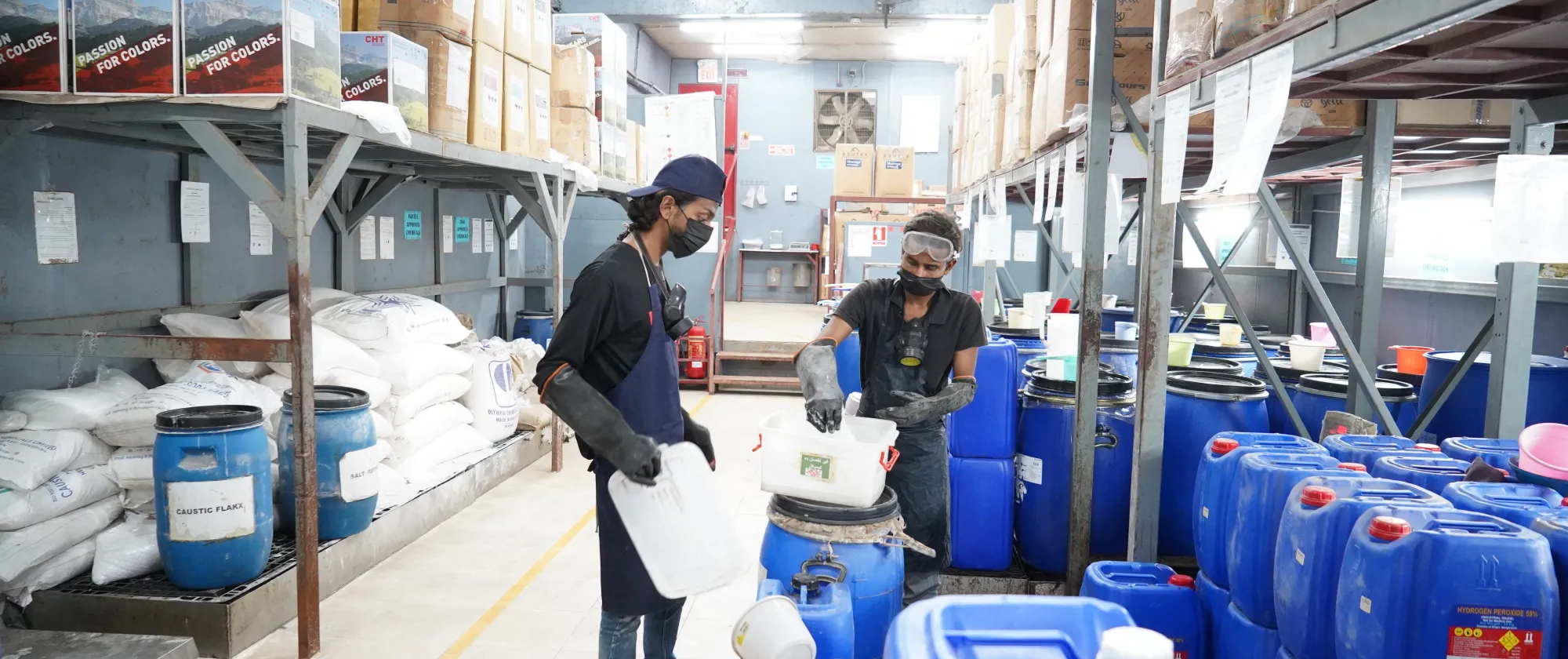
With support from UNEP, the project focuses on reducing the occupational safety and health (OSH) deficits caused by the exposure of hazardous chemicals at work.
Duration
14 August 2023 - 31 December 2025
Development partner(s)
United Nations Environment Programme (GEF-7/UNEP)
Reference
GLO/22/41/UNP
Contact
Syed Debaaj Hasan Abidi, [email protected]
Background
The International Labour Organization (ILO) has long recognized that the protection of workers from hazardous substances and chemicals or chemicals of concern is essential to ensuring healthy populations as well as sustainable environments. Workers, in particular women, continue to face disproportionally high exposures to hazardous chemicals, and exposure to hazardous substances claimed the lives of almost 1 million workers in 2015 alone. The ESCM Project focuses on reducing the Occupational Safety and Health (OSH) deficits faced by workers exposed to chemicals in textile Mills and contribute towards institutional and policy level interventions in line with international labour standards, particularly ILO Chemical Convention 1990 (No.170).
Objective
The overall objective of the project is to promote sound chemical management in the textile sector by strengthening Occupational Safety and Health (OSH) compliance and aligning practices with international labour standards. The project will initiate a pilot Capacity Building Programme with 10 textile mills in Karachi to review chemical management SOPs through comprehensive risk assessments. It aims to sensitize stakeholders on the ILO Chemicals Convention, 1990 (No. 170), and related codes of practice, and support mills to prioritize workers’ health and track environmental impacts from activities involving COCs and POPs. The project will further lead interventions under the Living Indus Initiative to reduce industrial effluents, support provincial labour departments in reviewing compliance checklists, and work with social security institutions to track chemical-related diagnoses and develop training modules for OSH and medical officers.
Project Outcome
To reduce the occupational safety health (OSH) deficits in chemical management, making workplaces safer for workers through capacity building at factory level, comprehensive compliance at institutional level, and policy advocacy for ILO Chemical Convention 1990 (No. 170).
Partners
Federal Ministry of Climate Change and Environmental Coordination, Federal Ministry of Overseas Pakistanis and Human Resource Development (MOPHRD), United Nations Environmental Programme, Employers’ and Workers’ organizations, academia, civil society, and relevant UN agencies.
Target Beneficiaries
Around 25,000 Textile Workers from the pilot phase, particularly in processing units and wet mills, and their families, communities residing near industrial estates, tripartite partners, industrial estate associations, developing partners sharing similar mandate, provincial labour and social security institutions.
Geographical Focus
Pakistan. The pilot phase is initiated in Karachi, Sindh, later expanded to Punjab.