

About PROSPECTS
Forced displacement – a defining global challenge
Today, over 123 million people are forcibly displaced worldwide due to conflict, violence, and persecution – nearly one in every 67 persons on the planet. This includes 42.7 million refugees, more than 73 million internally displaced persons, and nearly 50 million displaced children. Almost three-quarters of refugees are hosted in neighboring low- and middle-income countries, often for years, placing enormous pressure on national systems and local communities. Traditional humanitarian aid alone is no longer sufficient.
The Global Compact on Refugees and the 2016 World Humanitarian Summit called for the "New Way of Working", underlining the need for combined humanitarian and development action at scale. This paved the way for PROSPECTS.
About PROSPECTS
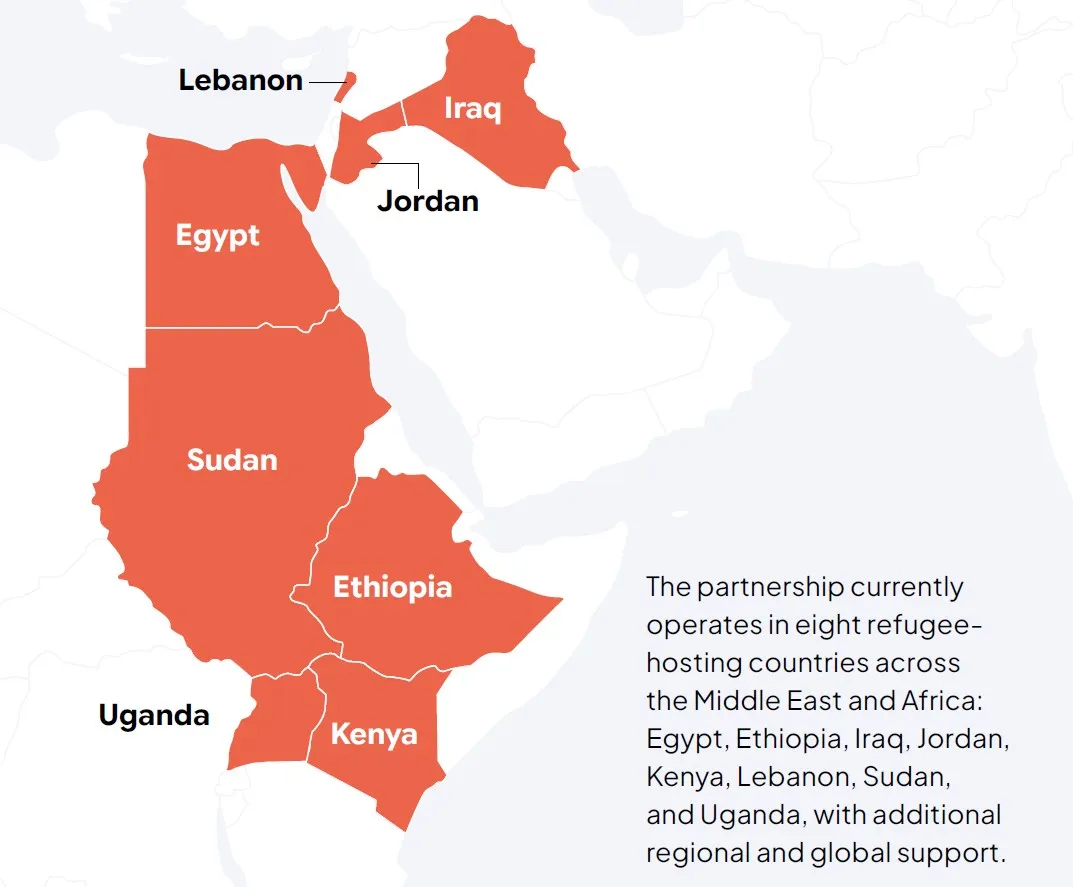
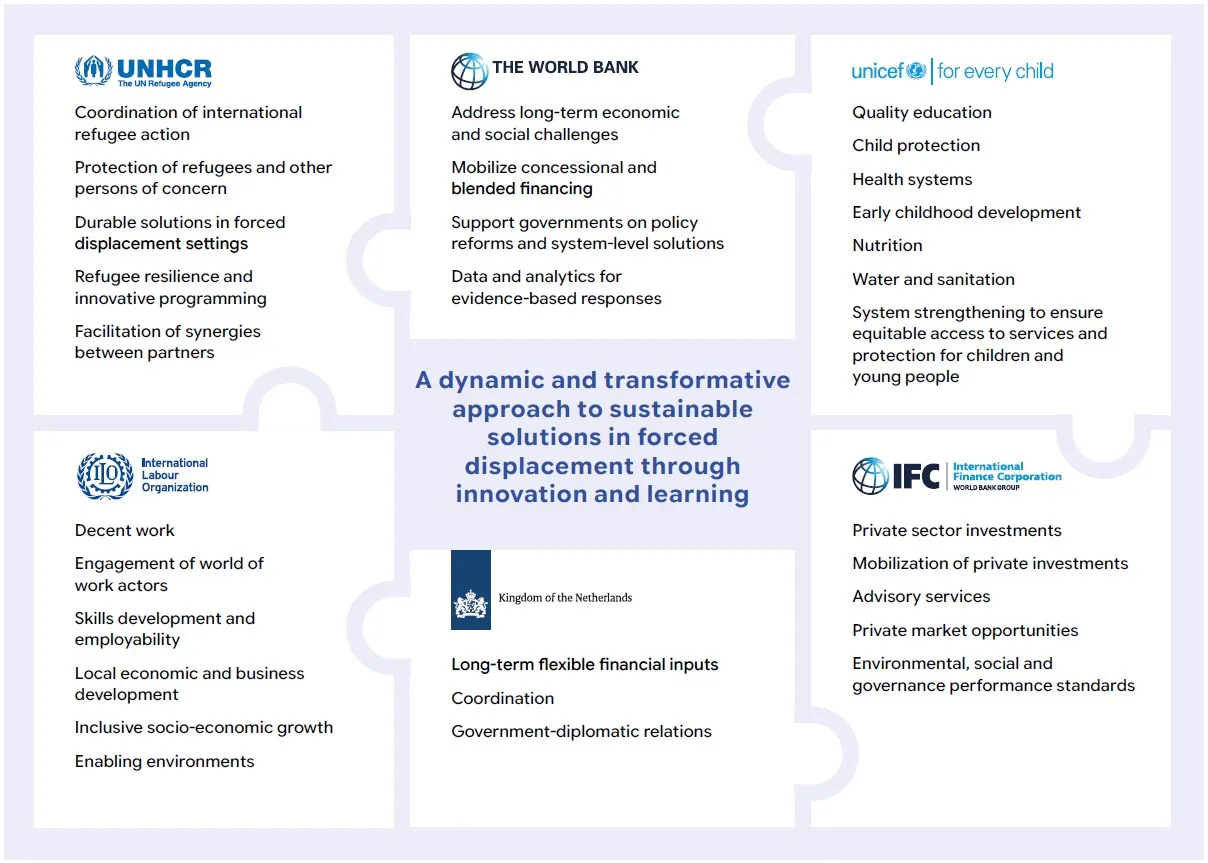
PROSPECTS – the Partnership for improving Partnership for improving prospects for forcibly displaced persons and host communities – is a groundbreaking, multi-year initiative financed by the Government of the Netherlands. It brings together multilateral organizations with complementary mandates: two branches of the World Bank Group – the International Finance Corporation (IFC) and the World Bank – and the International Labour Organization (ILO), United Nations Children's Fund (UNICEF), and the UN Refugee Agency (UNHCR).
How PROSPECTS works
PROSPECTS aims to uphold the rights of forcibly displaced persons and host communities and ensure equitable access to services by promoting:
- Self-reliance through stronger livelihoods, more and better jobs, mitigating vulnerabilities, and reduced dependency on external assistance.
- Inclusion of both communities in national and local social protection systems and services.
- Greater Resilience of forcibly displaced persons and host communities.
These efforts strengthen social cohesion by creating environments where displaced people and host communities build mutual trust, engage in meaningful dialogue and collaborate effectively. This sustains support from the hosts for forcibly displaced persons while empowering them to contribute positively to their new communities.
Phase 1 of PROSPECTS was implemented between 2019-2022. Now, Phase 2 (2023-27) focuses on supporting systemic policy change, helping integrate forcibly displaced persons and other vulnerable groups into national systems, and implementing longer-term and sustainable development interventions in protracted displacement contexts.
PROSPECTS delivers impact across four integrated pillars of work:
Protection and Social Protection
Strengthens legal protection, expands inclusion in national social protection systems, and ensures access to essential services so that forcibly displaced persons and host communities live in safety and dignity.
- More than two million refugees and asylum-seekers have been registered and/or received national civil status registration or documentation.
- More than 1.4 million children and adults have received MHPSS or other case management services.
Education and Training
Expands access to quality, inclusive education and market-relevant skills training for children, youth, and adults, supporting successful transitions from learning to earning.
- Over 1.5 million children and youth have enrolled in primary and secondary education.
- More than 590,000 people completed skills development training, including life skills, digital skills and technical skills.
Economic Inclusion
Increases access to decent work, entrepreneurship, financial services, and economic opportunities through policy engagement, private-sector partnerships, and targeted support to businesses and workers.
- Almost 210,000 people have been able to develop earning and livelihoods opportunities.
- Over 300,000 workdays were created for people through labour-intensive infrastructural development programmes
Critical Infrastructure
Improves essential facilities, services, and information systems — including water, sanitation, waste management, housing, and digital connectivity — to strengthen community resilience and support long-term inclusion
- 75,000 reached with basic sanitation services
- 519,000 reached with safe water services
(*All Figures 2019-25)
Together for Lasting Solutions: Collective Action for Refugees and Host Communities
The PROSPECTS Partnership, running until end 2027 with support of The Netherlands, has successfully built a coalition of humanitarian-development partners to deliver long-term solutions in protracted refugee situations.
Looking ahead, there is an opportunity – and a clear need – for a joint exploration of possibilities of future financing of development approaches to forced displacement with other donors and partners keen to address immediate needs while also building a more equitable and resilient future for displaced people and their host communities.