


Social safety nets
ILO/Japan Fund for Building Social Safety Nets in Asia and the Pacific (SSN Fund)
The SSN Fund aims to support ILO constituents in Asia and the Pacific for building social safety nets through a wide range of activities such as; capacity building of governmental entities; enhancing proactive actions of social partners; facilitating NGO’s partnerships; and promoting disaster relief.
Duration
15 June 2011 - 31 December 2027
Development partner(s)
Government of Japan
Reference
RAS/12/53/JPN, RAS/26/50/JPN
Contact
Mr Norikazu Takebe, Email: [email protected]; Mr Saiichi Matsuyama, Email: [email protected]
About our success story
Asian countries have experienced rapid economic growth in recent years, but persistent poverty and growing inequalities remain. Recent economic crises have revealed the need for adequate social safety nets to protect vulnerable populations from calamity. In response, a number of international organizations, including the ILO, took the initiative to promote social safety nets in Asian countries. Although differing in history, culture, religion and stage of development, many countries have made efforts to strengthen their social safety nets. However, we are still far from attaining the goal of providing adequate safety nets for all.
The establishment of social safety nets for vulnerable people have become more important than ever as the world globalizes. A crisis can spread rapidly and have a dramatic adverse impact on an entire regional economic system and labour market.
In addition, there are significant needs for appropriate and timely responses to natural disasters from the perspective of employment recovery, in which vulnerable people are the most affected, the least supported, and the last to rebuild their lives. Increasing rates of migration and a growing informal economy, as well as the need for women's empowerment are also key issues to work on.
Expected outcomes
The SSN Fund ultimately aims to build the fundamental capacity of countries in Asia Pacific to develop social safety nets. The following outcomes are expected from the programmes supported by the SSN Fund:
- Capacity building in governments and government research institutions
- Empowerment of trade unions and employers’ associations
- Networking among NGOs
- Implementation of occupational safety and health (OSH)
- Youth employment policy
- Prompt response to natural disasters
Beneficiaries
The target beneficiaries are workers, youth, migrant populations and women engaging in the labour market in Asia Pacific. The programmes also expect to bring development through partnership between ILO offices, social partners, and NGOs in the region. Practices will build capacity of government bodies, which is indispensable for implementing labour policies regarding the adoption of social safety nets and realization of decent work for all.
Projects and programmes
Improving workplace productivity and working conditions through social dialogue and collective bargaining in garment and hospitality...
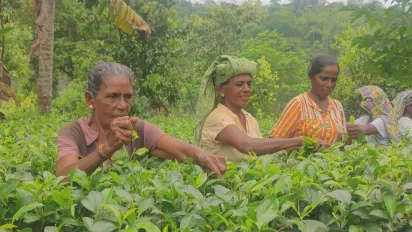
Resilient plantations: Advancing workers’ safety, health, and livelihood recovery
Publications
Final Report
Rapid assessment of hazardous work for children in Balkh Province
Tool guide
Child labour self-help guide for SMEs in Afghanistan

Multimedia
Videos showcase the impacts of collaborative efforts between Japan and the ILO
Countries covered
You may also be interested in
ILO/Japan Multi-bilateral Programme