

Project factsheet
ILO-OECD-WHO Working for Health (W4H) Programme
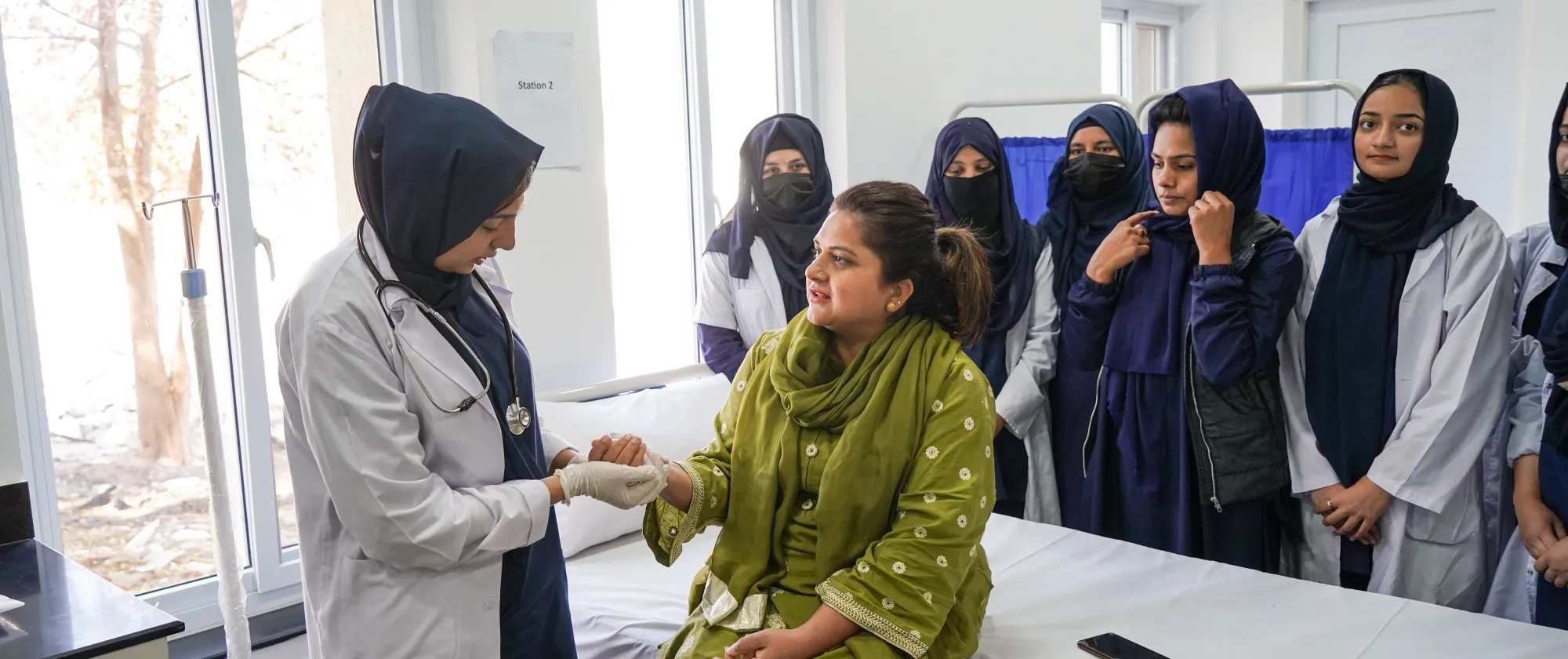
The Working for Health (W4H) Programme in Pakistan supports efforts to strengthen the health workforce by promoting decent work, safe working environments, and quality employment opportunities for health workers. It works with government institutions and social partners to improve occupational safety and health, advance international labour standards, and foster resilient health systems. The programme also advocates for gender-responsive and non-discriminatory policies that ensure equal opportunities and better working conditions across the health sector.
Duration
30 December 2023 - 31 December 2026
Development partner(s)
Multi-Partner Trust Fund Office - UNDP
Reference
GLO/23/32/UND
Location
Islamabad Capital Territory (ICT), Punjab
Contact
Roohiya Qazi, [email protected]
Background
Health and care workers are essential for delivering quality care and are the backbone of thriving economies. However, there is a projected shortfall of 11 million health workers by 2030, of which the majority are nurses and midwives to meet populations health needs. In 2016, the UN High-Level Commission on Health Employment and Economic Growth (HEEG) called for greater investment in workforce education, employment, and retention to build resilient health systems, create jobs, advance gender equality, and support inclusive growth.
To address this, the International Labour Organization (ILO), the Organization for Economic Co-operation and Development (OECD) and the World Health Organization (WHO), joined forces to support countries in creating decent jobs in health and social care and taking concrete action to tackle underinvestment and gaps in their health and social care workforce through the Working for Health (W4H) Programme. W4H supports governments and partners to develop, finance and implement workforce strategies for Universal Health Coverage (UHC), expanding trained health worker employment, improving working conditions, and building resilient health systems. This expansion and transformation of the health and social workforce contribute to advancing progress on SDG 3 (health), SDG 4 (education), SDG 5 (gender) and SDG 8 (decent work).
Objective
- Promote decent work, including a safe and healthy work environment for health workers in Pakistan.
- Guide the implementation of international labour standards in relation to health workers.
- Support the development of gender transformative policy, practices and non-discriminatory working conditions in the health sector.
Project Outcomes
- Strengthened health workforce governance and coordination at national and provincial levels.
- Supported gender-responsive, non-discriminatory policies and safer workplaces.
- Promoted health worker protection, well-being, inclusion, and OSH through HealthWISE.
- Improved health education and training by integrating OSH, gender sensitivity, labour standards, and decent work principles.
Partners
World Health Organization (WHO), Ministry of Overseas Pakistanis and Human Resource Development (MOPHR&D), Ministry of National Health Services, Regulations & Coordination (MoNHSR&C), Health Services Academy (HSA), Islamabad Healthcare Regulatory Authority (IHRA), Pakistan Nursing and Midwifery Council (PN&MC), Punjab Employees Social Security Institution (PESSI) and selected organizations of the health sector and Employers’ and Workers’ Organizations.
Target Beneficiaries
Ministry of Health, Health professionals, employers in the health sector and those associated with the sector.
Geographical Focus
Islamabad Capital Territory (ICT), Punjab
For further information please contact
Roohiya Qazi
Programme Officer
[email protected]