

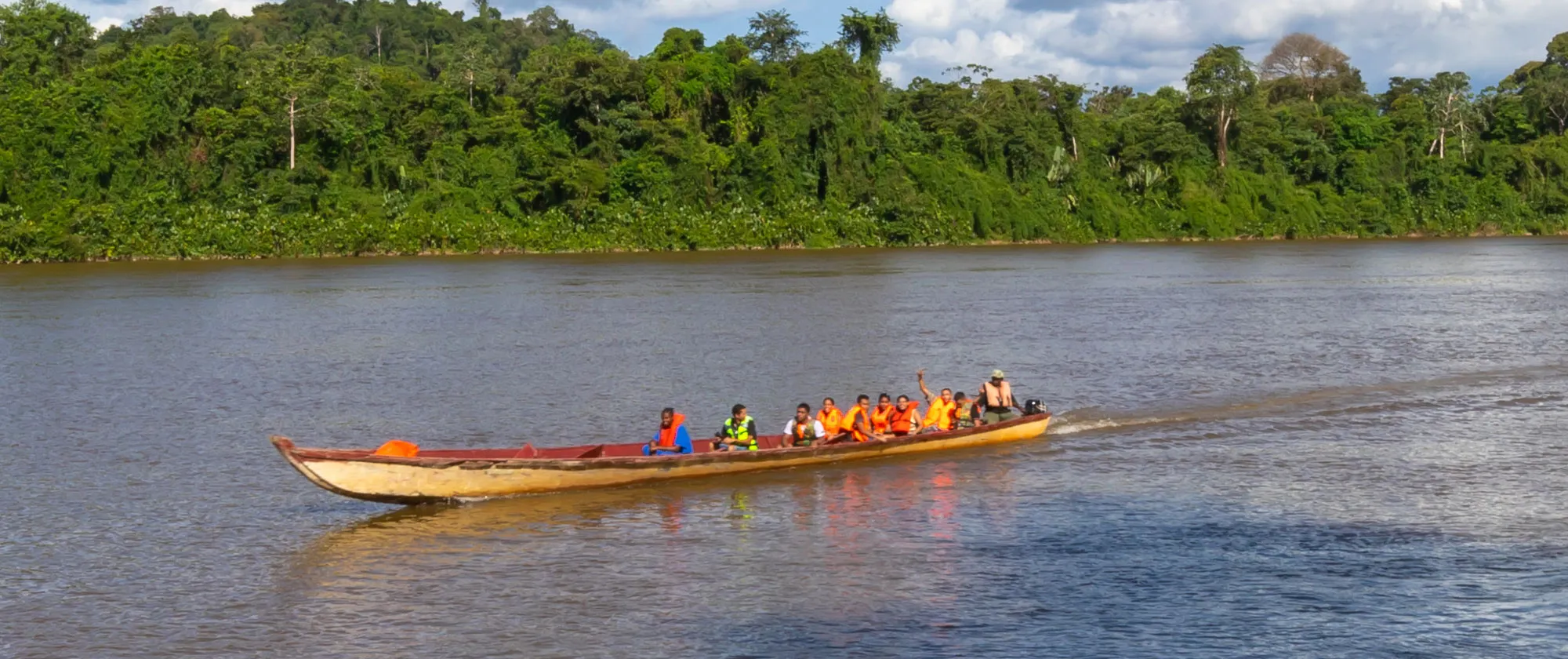
Environmentally focused value chain development in the economy of Suriname, fostering enterprise creation and formalization through just transition
Duration
1 April 2024 - 31 March 2025
Development partner(s)
Regular budget supplementary account
Reference
SUR/23/01/RBS
Location
Suriname
Contact
Shoblina Chotkan-Somai
Objective
This project aims to support Suriname’s transition to a more diversified and green economy, in alignment with its Multi-Year Development Plan (2022-2026) and the SDGs. Suriname, a country with vast forest cover and reliance on natural resources like gold, oil, and timber, seeks to reduce its dependence on these sectors through sustainable economic growth. The project focuses on two main thematic areas: Promoting Just Transition and Addressing Informality.
The key objectives of the project are:
- To build the capacity of ILO Constituents in Suriname to formulate and implement policies supporting a just transition and formalization in selected sectors and value chains.
- To assist Surinamese micro, small, and medium enterprises (MSMEs) in green value chains to transition to formality, creating more decent work opportunities.
- To empower local and regional governments, along with community leaders, to lead just and formal transitions within their territories.
Project outcome
The project will target rural and interior areas of Suriname, where there are significant gaps in social and economic development. It will also focus on including marginalized communities, such as Indigenous and Maroon populations, in the development process. Additionally, gender equality will be prioritized, ensuring that the project’s activities are gender-responsive and inclusive. By 2025, the project aims to foster the creation of environmentally sustainable value chains that support economic diversification, increase formal employment, and contribute to a just transition.
Key outputs
Institutional strengthening for just transition and formalization
Employer and worker organizations enhanced their capacity through targeted training programs. Employers received Just Transition and formalization training, including the MyGreen Enterprise methodology, with 22 trainers (63% female) trained to support 80 MSMEs. A digital platform was developed to expand access to green business resources. Workers' organizations trained 16 representatives (50% female) in social dialogue and negotiation, and new Just Transition learning modules were integrated into labor college curricula.
Policy development for a sustainable economy
Suriname prioritized wood processing and ecotourism for Just Transition efforts, supported by a value chain study identifying policy gaps and sector needs. Pilot programs in Indigenous and Tribal villages strengthened village planning, social dialogue, and access to formalization resources. Awareness campaigns connected local communities with key institutions, improving collaboration on taxation, labor inspection, and financing. These efforts contributed to the inclusion of Just Transition in Suriname’s Green Development Strategy and strengthened inter-ministerial cooperation.
Enterprise formalization and access to finance
A study on enterprise formalization led to a roadmap for action. Stakeholder meetings with 42 participants (45% female) identified access to finance as a key incentive for formalization. The National Development Bank launched awareness sessions in three villages, registering new SMEs for funding. 34 municipal officials (95% female) were trained to apply Just Transition principles in district planning. The Ministry of Labour established tripartite committees on Just Transition and Formalization to oversee policy development and implementation.
These outputs highlight the project's success in fostering environmentally sustainable value chains, empowering stakeholders at all levels, and creating pathways for formalization and inclusive economic growth in Suriname.