


Co-Creating Network for Protecting the Human Dignity of Migrant Workers in South-East Asia
The project aims to strengthen the protection of migrant workers and uphold their human dignity as they move to Japan by fostering regional cooperation among stakeholders in Asia. It supports dialogue, knowledge sharing, mutual learning and practical collabo ration to improve migrant workers’ protection, access to information and remedies, and coordinated responses to common challenges along the migration corridor to Japan.
Duration
15 March 2025 - 14 March 2027
Development partner(s)
Japan International Cooperation Agency, ILO-Japan Fund for Building Social Safety Nets in Asia and the Pacific
Reference
RAS/25/50/JPN, RAS/25/01/JPN
Contact
Reina Kuwashima, Project Operation Officer, [email protected]
About the project
Labour migration to Japan has increased significantly in recent years, creating both opportunities and challenges for migrant workers and institutions involved in migration governance. As labour mobility expands, stronger regional cooperation is needed to improve migrant workers’ protection, access to information and remedy, and coordinated responses to common challenges across the migration corridor.
In response to these challenges, the ILO and JICA implemented the “Survey for Co-creating a Joint Work Plan for Improving Access to Remedy of Migrant Workers from Southeast Asia to Japan” from March 2024 to March 2025. Through this initiative, stakeholders identified common challenges, existing efforts and priority actions to strengthen protection and access to remedy for migrant workers along Asia–Japan migration corridors. The discussions also highlighted the need for a sustained multi-stakeholder platform to support ongoing coordination, mutual learning and information-sharing.
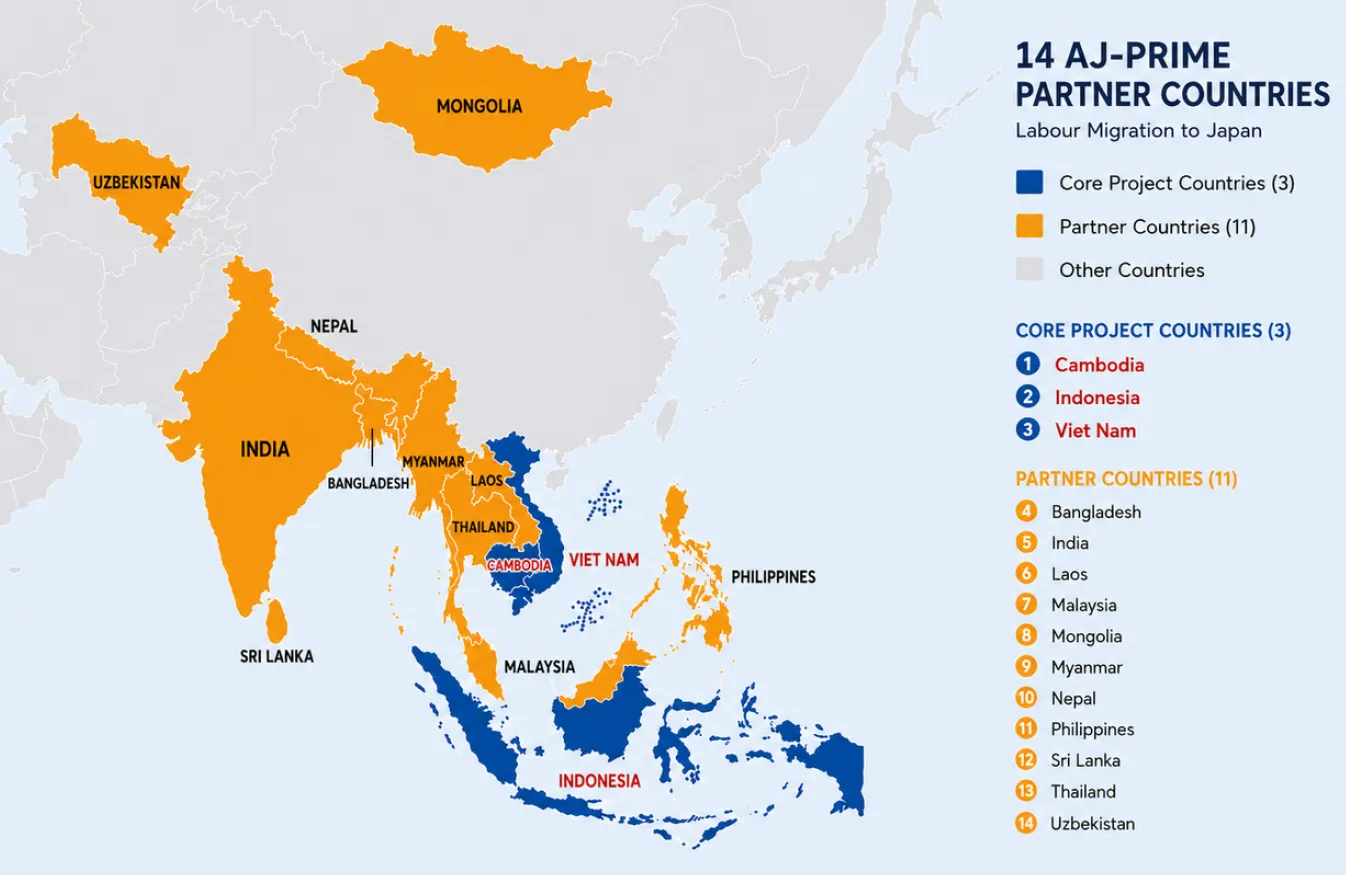
To address this need, the project “Co-Creating Network for Protecting the Human Dignity of Migrant Workers in South-East Asia” was launched in March 2025 to strengthen regional dialogue, knowledge sharing, mutual learning and practical collaboration among stakeholders across Asia. The regional network brings together stakeholders from 14 countries, including governments, workers’ and employers’ organizations, civil society organizations, recruitment-related institutions, academia and international partners, to promote dialogue, information sharing, mutual learning and coordinated action.
Participating organizations
The link below provides a list of the organizations that participated in the 2025 Japan Workshop and the 2026 Regional Workshop and together form the current network.
Collaborating countries
Countries where initial project implementation is focused, with collaboration extending through the wider regional network.
Joint work plan
The Joint Work Plan provides a shared framework for collaboration among participating stakeholders to strengthen the protection of migrant workers along the Asia–Japan corridor.
The framework was first developed through a Regional Workshop in 2025 and subsequently updated through a Regional Workshop in 2026 to reflect emerging priorities and experience from implementation.
The four key pillars
- Grievance mechanisms
- Empowerment of migrant workers
- Fair and ethical recruitment
- Implementation mechanism and enabling environment
Related content
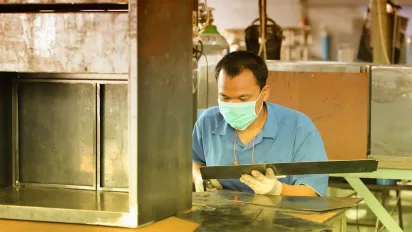
Consultations help improve access to remedy for Indonesian migrant workers bound for Japan
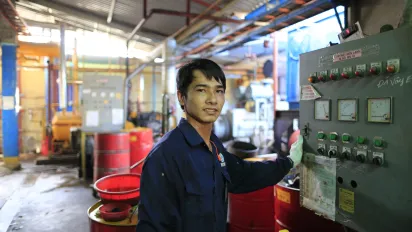
Labour Migration
Lawyers, NGOs pivotal to providing remedy services for migrant workers

Labour Migration
How to improve remedy for migrant workers from Cambodia to Japan?

Labour Migration
Joint work plan developed to improve access to remedies for migrant workers from South-East Asia to Japan