

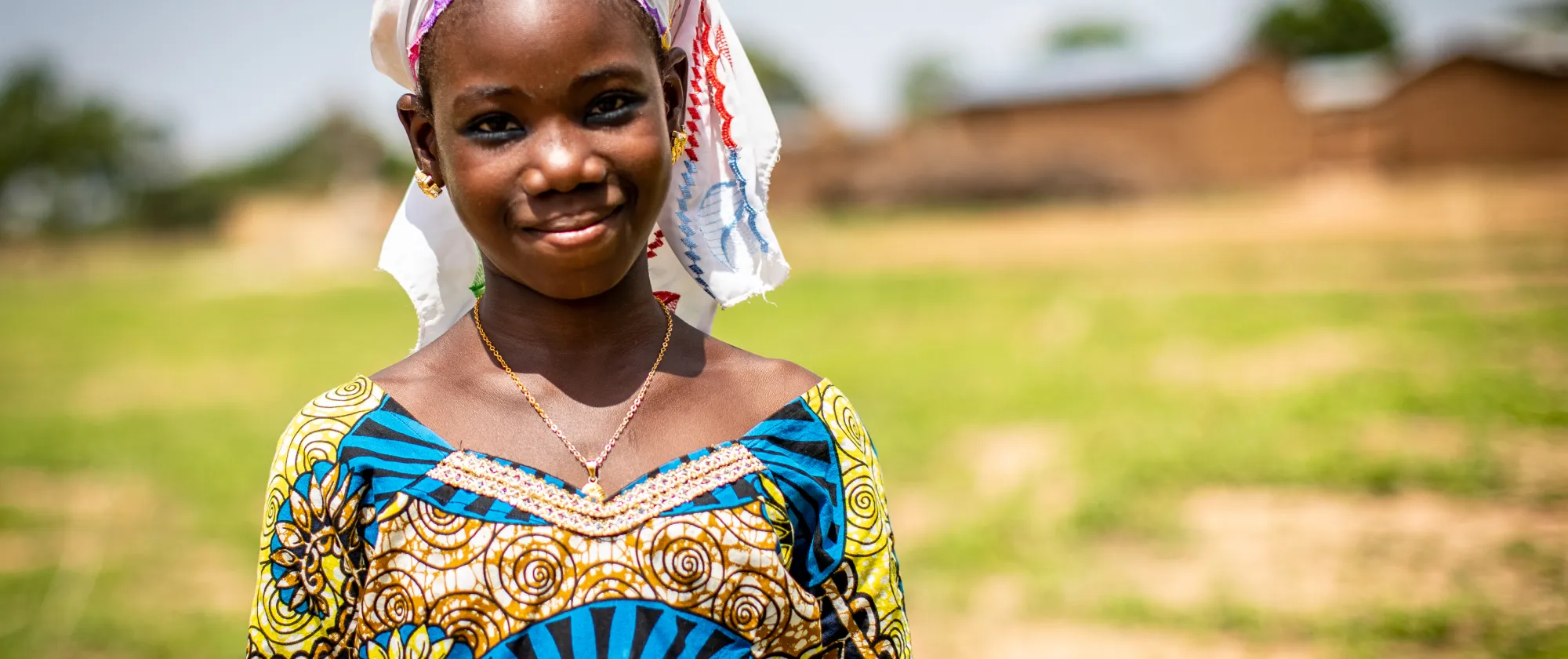
CLEAR Cotton activities in Mali
The project contributes to efforts to tackle child and forced labour, focusing on the cotton, textile, and garment value chains.
| When: | March 2018 - February 2023 |
|---|---|
| Project Code: | GLO/17/15/EUR |
| Donor: | European Union |
| Contact(s): | [email protected] |
National context
According to the latest ILO-UNICEF global estimates, more than 160 million children are in child labour worldwide. Sub-Saharan Africa has the highest prevalence, with nearly 24% of the region's children in child labour, representing 86.6 million children.
In Mali, two-thirds of children (boys and girls) aged 5-17 contribute to an economic activity, with 59% of these children employed in agriculture, forestry and fishing (National Child Labour Survey, DNSI 2005). The incidence of child labour is high, with 12.3% of children aged 5-14 (14.6% of boys and 9.6% of girls) engaged in child labour. Agriculture is also the most important economic activity where child labour is found (81.9%). Among them, 20.1% of children (24.2% of boys and 17.7% of girls) are engaged in hazardous work. There is also evidence that 89.9% of children are engaged in unpaid work (ILO and UNESCO statistics).
The Government of Mali is committed to fight child labour. The country has ratified the ILO's fundamental conventions on child labour: Convention No. 182 on the worst forms of child labour, on 14 July 2000 and Convention No. 138 on the minimum age for admission to employment, on 11 March 2002. Among other actions, the Government has created the National Unit for the Fight against Child Labour (CNLTE) within the National Labour Directorate (Ministry of Labour, Civil Service and Social Dialogue); and the National Steering Committee for the Fight against Child Labour, bringing together several ministries, social partners, and civil society organisations. It has also established a National Programme to Combat Child Labour (PNLTE) and a National Action Plan for the Elimination of Child Labour in Mali (PANETEM), adopted a Roadmap to Eliminate Child Labour in Agriculture.
The CLEAR Cotton Project contributes to efforts to combat child and forced labour, focusing on the cotton, textile and garment value chain. In Mali, cotton is of strategic importance. It is grown mainly in the South and South-East regions (Sikasso, Koutiala, Koulikoro). The cotton sector generates regular cash income for a significant proportion of the rural population and contributes to the well-being of more than 4 million people. Its share in GDP is estimated at 15% in 2019. Cotton accounts for 12% of budget revenue. It also contributes to the development of several areas of the economy: transport, banking and microfinance institutions, agricultural input supplies and industrial supplies, processing industries and handicrafts, etc.
The Covid-19 pandemic and its economic repercussions have affected the world cotton production, and therefore Mali's. Cotton production has fallen by 70%, from 710,000 tonnes in 2019/2020 to 200,000 the following year - and thus impacting on the incomes of cotton producing households.
Main project activities
Project activities in Mali include:
- Improve access to education of children in or at risk of child labour in cotton production areas through accelerated schooling programmes to reintegrate mainstream schools.
- Provide vocational training to children aged 15-17 in or at risk of child labour to access decent work opportunities in the cotton, textile and garment value chains.
- Strengthen livelihoods of vulnerable families through training on new income generating activities.
- Raise awareness of key stakeholders, target communities and the general public on child and forced labour.
- Develop community-based multi-stakeholder monitoring and remedial mechanisms to combat child labour and forced labour.
- Provide capacity building for labour inspectors, representatives of employers’, workers’ and cotton producers’ organizations
- Conduct quantitative and qualitative research on child labour, forced labour and other fundamental principles and rights at work in the national cotton, textile and garment value chains to complement the knowledge base.
Partners
- Ministries in charge of Labour, Employment, Vocational Training, Education and Agriculture.
- National Unit to Combat Child Labour (CNLTE).
- Workers' organizations: Confédération syndicale des travailleurs du Mali (CSTM); Union Nationale des Travailleurs du Mali (UNTM).
- Employers' organizations: Conseil National du Patronat du Mali (CNPM).
- Producers’ organizations: Compagnie malienne pour le développement des textiles (CMDT); Confédération des Sociétés Coopératives des Producteurs de Coton (C-SCPC).
- Civil society organizations.
Target beneficiaries
- Children in or at risk of child labour, and their families, working at any level of the cotton, garment and textile production chains; victims of forced labour and workers at risk of forced labour; cotton producers communities; cotton cooperatives; workers of the cotton, garment and textile production chains.
- Local public authorities, labour inspectors, employers’, workers’ and producers’ organizations; enterprises, and media.
News
Child labour in time of COVID
Combating child labour in times of COVID-19: the example of the CLEAR Cotton project
Child Labour
African musicians win Music Against Child Labour Competition
ILO launches socio-professional reintegration activities for young people exposed to child labour in Mali
Eliminating child labour
CLEAR Cotton and ACCEL Africa projects raise awareness about child labour in Mali on World Day Against Child Labour
Training of Trainers Workshop on cooperative development for the elimination of child labour conducted in Mali
Child labour
The CLEAR Cotton project offers education opportunities as an alternative to child labour in the cotton fields
Child labour
Accelerated schooling strategy (SSA/P) in Mali: 800 beneficiaries received school supply kits and textbooks
Music competition launched to raise awareness of child labour
Partners and initiatives
Food and Agriculture Organization of the United Nations
European Commission
ILO Office in Mali
ACCEL Africa Project