

Responsible business conduct
Advancing Responsible Supply Chains and Decent Work in Asia (RSC)
Funded by the Government of Japan, the RSC project promotes decent work, supports more responsible and sustainable enterprises, and strengthens supply chain resilience across Asia.
Duration
1 April 2026 - 31 March 2027
Development partner(s)
Ministry of Economy, Trade and Industry, Japan (METI)
Reference
RAS/26/04/JPN
Location
Bangkok, Thailand and Tokyo, Japan
Contact
Mattie Milliken, Project Technical Officer, Email: [email protected]; Noppavut Pravat, National Project Coordinator, Email: [email protected]; Mao Kado, National Project Coordinator, Email: [email protected]
About RSC project
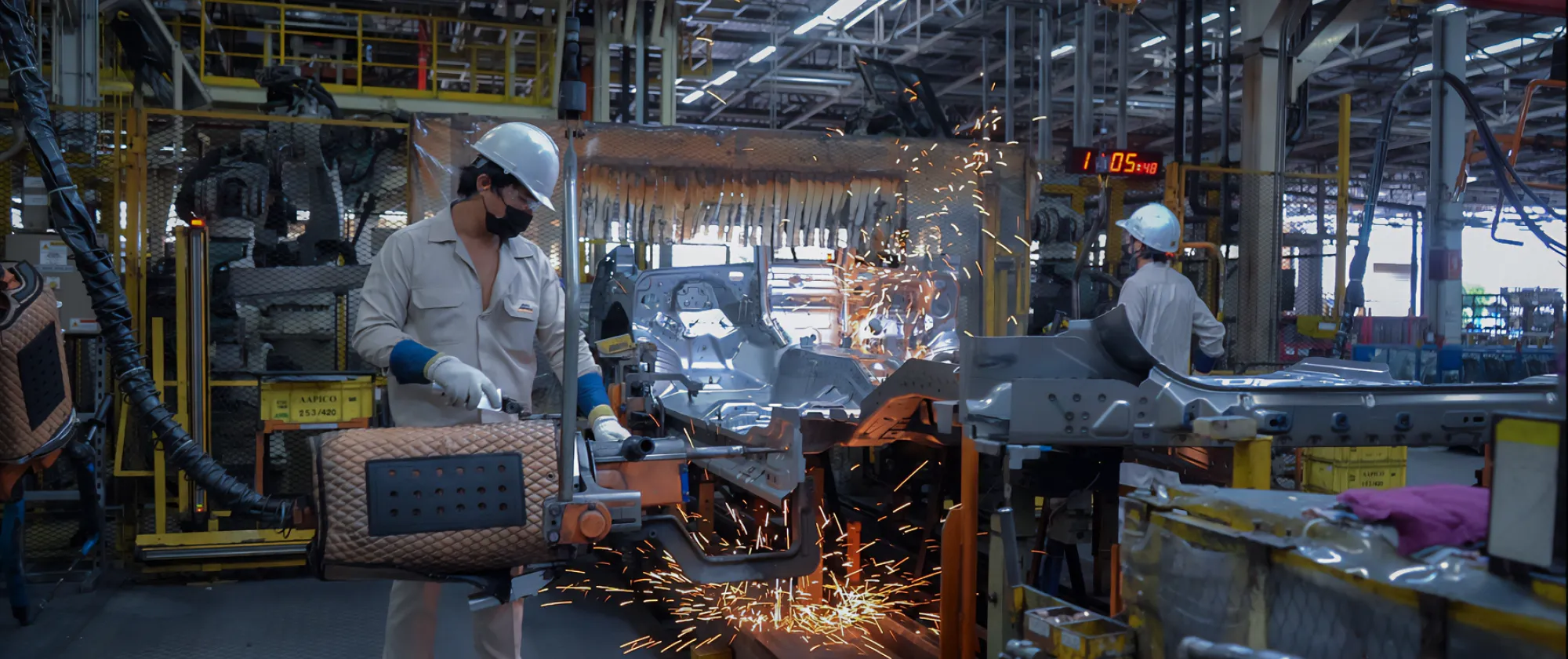
The RSC project is an initiative led by the International Labour Organization (ILO) and supported by the Ministry of Economy, Trade and Industry (METI) of the Government of Japan. Grounded in international labour standards, it works with tripartite constituents and key industry stakeholders to advance decent work, support more inclusive and responsible enterprises, and strengthen supply chain resilience through dialogue and collaboration, particularly between Thailand and Japan.
In Thailand, the project supports enterprises, particularly SMEs in the automotive and electronics sectors, through hands-on training and mentoring on human rights due diligence (HRDD), workplace cooperation and social dialogue. It also fosters multistakeholder dialogue to strengthen the enabling environment for responsible business conduct (RBC).
In Japan, the project builds capacity and supports constituents to design and strengthen policies and frameworks for RBC, in line with international labour standards.
Country and industry profiles
Thailand
i. Automotive:
- Profile: A Top-10 global automaker and ASEAN’s leading automotive producer-exporter (accounting for 2 per cent of global automotive trade)
- Production: Annual production over 2 million units; with exports worth US$ 28.9 billion (2025)
- Firms: 30 major OEMs present, mostly from Japan and Europe but with growing Chinese investment, along with over 2,500 suppliers, including SMEs, across the supply chain
- Workforce: 850,000 workers (about 535,000 in manufacturing) in 2025
- Policies: Government plans to position Thailand as a global EV (and zero emissions vehicle) hub, with strong linkages to the electronics sector.
ii. Electronics:
- Profile: Highly export-oriented, with around 90 per cent of production destined for international markets
- Production: The 8th world’s largest manufacturing base, accounted for 1.9 per cent of global exports (and 27.4 per cent of country’s export) in 2024, with the market dominated by Asia & Europe
- Firms: Over 2,400 firms located in both Bangkok Metropolitan and EEC areas
- Workforce: Approx. 600,000 workers in 2025
- Policies: Market is driven by demand from advanced industries such as automation, healthcare, and next-generation automotive sectors according to the national plans and priorities.
Japan
- Home to major multinational enterprises (MNEs) in automotive and electronics supply chains across Asia
- Strongly integrated into global and regional value chains, with automotive exports reaching around JPY 22.5 trillion in 2024
- A large base of small and medium-sized enterprises (SMEs) integrated into multi-tier supply chains, playing a critical role as suppliers and subcontractors
- Increasing emphasis on RBC, including through its NAP-BHR (2025) which outlines plans to promote HRDD and build capacity of SMEs
Project activities
In Thailand:
- HRDD training and mentoring for enterprises in Thailand’s automotive and automotive electronics sectors, particularly for SMEs
- Tripartite and multi-stakeholder dialogues to strengthen the enabling environment for RBC, through knowledge sharing, exchange & improved supply chain networks
In Japan:
- Policy support and constituent capacity building to strengthen national RBC frameworks (and their implementation), in line with international labour standards
Target beneficiaries
- Employers’ and workers’ organizations
- Enterprises
- Policymakers
- Other key industry stakeholders – both nationals and multinationals (especially Thai and Japanese)
Expected project outcomes
- Enterprises in Thailand’s automotive and electronics sector, particularly SMEs, improved HRDD, workplace cooperation and social dialogue practices.
- Coordinated approaches to RBC and resilient & sustainable supply chains are strengthened through muti-stakeholder dialogue (especially between Thailand and Japan).
- National capacity in Japan for the promotion of responsible and sustainable business practices for the realization of decent work is strengthened.
Constituents and stakeholders
Thailand:
- Government: Ministry of Labour, Ministry of Industry, Ministry of Commerce, Office of the National Economic and Social Development Council
- Representative organizations of employers: Employers' Confederation of Thailand (ECOT), Federation of Thai Industries (FTI)
- Representative organizations of workers: Thai Trade Union Congress (TTUC), Labour Congress of Thailand (LCT), National Congress Private Industrial of Employees (NPCE), State Enterprises Workers' Relations Confederation (SERC), Automobile Labour Congress of Thailand (ALCT) and Confederation of Thai Appliances, Electronics, Automobile and Metal Workers (TEAM)
- Other national stakeholders: Thailand Automotive Institute (TAI), Electrical and Electronics Institute (EEI), The Eastern Economic Corridor Office of Thailand (EECO)
Japan:
- Government: Ministry of Ministry of Economy, Trade and Industry (METI)
- Representative organizations of employers: Keidanren
- Representative organizations of workers: JTUC-RENGO
- Other national stakeholders: TBC
Latest news and stories
Responsible business conduct
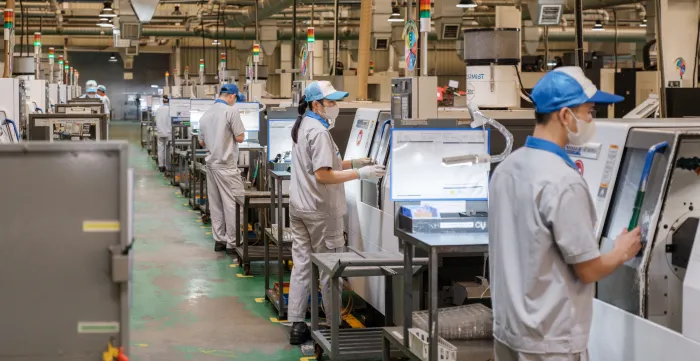
ILO training strengthens human rights due diligence in Thailand's automotive and electronics sectors
Responsible business conduct
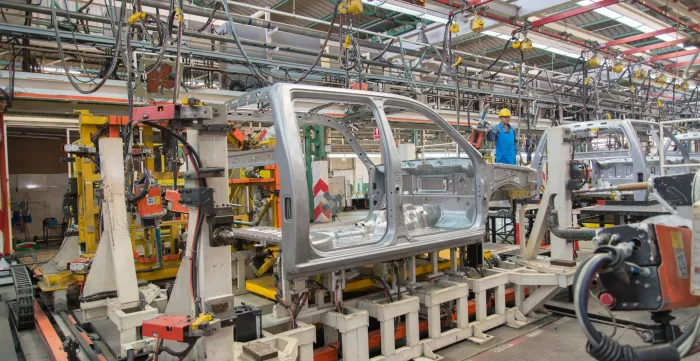
Mentorship supports human rights due diligence in Thailand’s automotive and electronics supply chains
Publications
Factsheet
Advancing Responsible Supply Chains and Decent Work in Asia (RSC)
You may also be interested in

Skills development and responsible business conduct
Skills Development and Responsible Business Conduct for Transition