Advancing social justice, promoting decent work
ILO is a specialized agency of the United Nations
English
International AIDS Conference – 29 July-2 August 2022, Montreal, Canada
Trade unions contribute to the development of non-discriminatory workplace policies for workers living with HIV
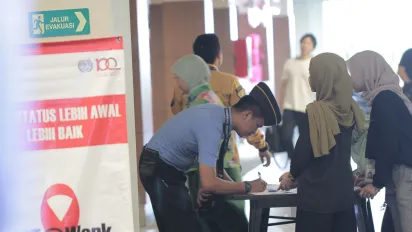
During 2020 and 2021, ILO supported three union confederations in Indonesia (KSPN, KSPSI-AITUC and K-Sarbumusi) to advocate for the development of non-discriminatory policy for workers living with HIV. The PLHIV community, District Aids Commission and District Health Office were engaged in this process.
International AIDS Conference – 29 July-2 August 2022, Montreal, Canada
Abstract Number: EPD468
Title:
Trade Unions contribute to the development of non-discriminatory workplace policies for workers living with HIV
Authors:
E. Nuriana, ILO, HIV/AIDS, Jakarta, Indonesia
d.M. Trisiswati, University of Yarsi, YARSI HIV AIDS CARE, Jakarta, Indonesia
D. Schaaf, ILO, Gender, Equality, Diversity and Inclusion Branch, Geneva, Switzerland
S. Sudjatmiko, Confederation of Indonesia Moslem Labour Union (K-Sarbumusi), Jakarta, Indonesia
L.M. Usman, Confederation of National Trade Union (KSPN), Jakarta, Indonesia
T. Pangaribuan, All Indonesia Trade Union Confederation (KSPSI – AITUC), Jakarta, Indonesia
Category:
D49: HIV and the workplace: Policies, responding to stigma and/or discrimination, unemployment, return to work and rehabilitation
Country of research:
Indonesia
Background:
HIV-related related discrimination continues to persist, including in the workplaces. 63% respondents in an ILO Gallup survey 2021, in Indonesia reported that people who have HIV should not be allowed to work with those who don’t have HIV. Trade unions took up the challenge of developing non-discriminatory HIV workplace policies working in close collaboration with employers.
Description:
During 2020 and 2021, ILO supported three union confederations in Indonesia (KSPN, KSPSI-AITUC and K-Sarbumusi) to advocate for the development of non-discriminatory policy for workers living with HIV. The PLHIV community, District Aids Commission and District Health Office were engaged in this process. Three non-discriminatory policies were developed at national confederation level, district level and company level in prioritized sectors (land transport, sea farers and garment). 45 peer educators who were trained reached out to over 3,600 workers, IEC/campaign materials were developed and disseminated. HIV testing reached 267 male and 106 female workers. KSPN has successfully negotiated a clause in the renewed collective bargaining agreement that covers the right of workers living with HIV to continue working and the regular implementation of a training on harassment, violence, and HIV awareness.
Lessons:
Strong leadership, a good relationship with top management and buyer representatives created a mutual collaboration between union organization and the company management on developing a non-discriminatory policy for PLHIV at the workplace.
Strong trade union leadership in certain sectors can play an important role in prioritizing those workplaces with workers who are more vulnerable for HIV infection, for example the transport, informal, seafarers and seaport crew sectors
The trained HIV peer educator among union member, tailor-made campaign tools and IEC material that were sector specific increased more interest among union members to join the HIV prevention session both inside and outside the companies.
Conclusions:
Unions demonstrated their commitment to HIV and AIDS and played their role in the implementation of the 68/2004 Manpower Ministerial Decree on HIV and AIDS .This strategic intervention was communicated to Ministry of Health and Ministry of Home Affairs as a model for replication and scaling up. K-Sarbumusi scheduled the replication to other companies in different district.