

Symposium on Strategic Labour Law Compliance in Indonesia through the Labour Inspection System
Given the range of national experience and innovation on labour inspection as well as private compliance, including in Indonesia, this proposed Symposium is an opportunity for the Indonesian Government together with its social partners to further discuss an overall strategy for workplace compliance through labour inspection that corresponds to the labour market and governance characteristics of the country.
Context and Rationale
The classic model of labour inspection – a state monopoly over securing labour law compliance in enterprises through visitation and sanctioning powers – remains a hallmark of labour market governance in most countries.Yet, in an era of complex global supply chains, non-standard forms of employment, the rising gig economy and still vast informal work, the effectiveness of this model alone and the capacity of labour inspectorates to implement it has its limits. This is especially true in developing and middle-income countries where often under resourced inspectorates face burgeoning workforces and rapidly changing labour markets.
Efforts by inspectorates are further challenged when labour law compliance is fractured across different ministerial departments or loosely coordinated government authorities (e.g. general working conditions; OSH; social security, industrial relations etc.). The influence of labour ministries on compliance is further hampered where there is a lack of meaningful incentives/disincentives to achieve sustainable compliance.
An enforcement that only seeks to cover all enterprises on a regular basis using a “find and fix” approach is, in most cases, unachievable. For example in many countries, it would take several years (sometimes decades) for inspectors to visit every enterprise at least once. This approach in isolation is therefore likely inadequate as a strategy to ensure durable decent working conditions. The perennial shortage of inspectors in most countries is itself a reason to pursue different and higher impact strategies that target not only priority areas of non-compliance but the drivers of non-compliance themselves.
The limitations of inspectorates in securing compliance has also led to the emergence of numerous national and international private compliance initiatives and actors, particularly in global supply chains. In addition, trade unions and employers, in their own ways, have autonomously contributed to such efforts whether through collective action and advocacy, or the development of codes of conduct and supply chain labour management practices.
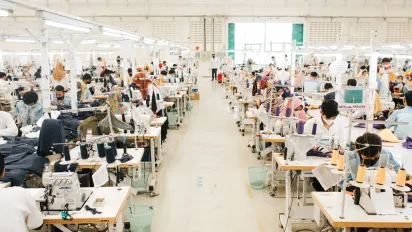
These developments have also spurred innovations between inspectorates and private compliance initiatives. Labour inspection collaboration with the ILO/IFC Better Work programme in the garment sector (in Indonesia and elsewhere) is one example. Inspectorates have an advisory role in BW and both parties have benefited from the sharing of training and assessment tools and methods. Recent years have seen further joint innovations through the Zero Tolerance Protocol as well as shared efforts to address persistent non-compliance in some BW factories.
Inspectorates have looked to innovate their own enforcement strategies by, among many examples, focusing on key risks and sectors, linking compliance to financial and regulatory incentives, using social and peer pressure to drive compliant behaviour, engaging with social partners at the national and firm level to build partnerships for compliance, leveraging new technology, promoting self-assessments, or even working directly with manufacturers on the design of safer equipment.
In Indonesia, one example is recent work by the inspectorate to train labour norms experts (KNK) for improving the understanding of enterprises on the most effective means of complying with the law. Moreover, the Government’s proposed Labour Compliance Programme (PROKEP) builds on the KNK in an effort to reduce compliance risks in enterprises, contribute to productivity improvements, and improve the effectiveness of inspection action, while ensuring worker protection.
Given the range of national experience and innovation on labour inspection as well as private compliance, including in Indonesia, this proposed Symposium is an opportunity for the Indonesian Government together with its social partners to further discuss an overall strategy for workplace compliance through labour inspection that corresponds to the labour market and governance characteristics of the country. It is also an opportunity to look beyond the mandate of the inspectorate alone, to promising areas of partnership and coordination with other ministerial departments and agencies engaged in workplace compliance both at the national and provincial levels.
As a contribution to the dialogue among Indonesian constituents, the Symposium would bring resource people from select national inspectorates, private enterprises and the ILO to share ideas and experiences on innovations for better workplace compliance. At the same time, the Symposium would be an occasion to exchange views on how to encourage greater ownership and involvement of enterprises and social partners, as well as their collaboration, towards ensuring decent working conditions and promoting a culture of compliance.
Key Symposium Themes
- Labour inspection strategic planning for labour law compliance.
- The role of private or enterprise-based compliance initiatives as a contribution to overall national compliance strategies.
- Labour inspectorate and social partner engagement.
Expected Outcomes
As a result of this Symposium, participants should have a better understanding of:- good examples and potential strategies for enhanced strategic labour law compliance in Indonesia;
- options for further collaboration between the labour inspectorate and Better Work to reinforce compliance in the garment sector;
- opportunities for labour inspectorates to promote and/or collaborate with private compliance initiatives;
- the role of the social partners in supporting and contributing to labour law compliance through labour inspection.
Related content
Better Work Programme in Indonesia - Phase V

Labour law compliance
Symposium highlights new ways to modernize labour inspections in Indonesia
Factsheet on labour inspection in Indonesia (2017 edition)
Agenda of the "Symposium on Strategic Labour Law Compliance in Indonesia through the Labour Inspection System", Jakarta, Indonesia 4-6...
Labor inspection developments in the Philippines
Achieving compliance through strategic compliance planning
Indonesia labor law enforcement and innovation in Indonesia
The innovation in the labour inspection activities in Vietnam
Designing incentives and disincentives for compliance
Strategic approaches to labour standards compliance – Results based inspection planning and cross agency collaboration
Results and innovations in working with labour inspectorates
Private & state regulation: combining two approaches for maximum effectiveness
Relevant projects
Better Work Programme in Indonesia - Phase V