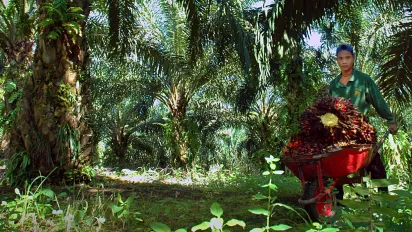
The “Joint ILO-EU project to improve knowledge base and safety and health in global supply chains to support G20 work on safer workplaces” (i.e. ILO-EU project on OSH in GSCs, GLO/15/39/EUR) aims at identifying drivers and constraints for occupational safety and health (OSH) improvement in global supply chains (GSCs) and focuses on agricultural GSCs in Colombia, Indonesia and Madagascar.
The country case studies should:
Identify underlying constraints that are preventing improvement / compliance on OSH within the supply chain (systemic constraints);
Identify incentives and capacities for private and public actors to contribute to a solution (successful experiences / possible points of entry for change); and
Identify pathways for sustainably improving OSH in targeted supply chains (possible intervention models).
On the basis of an analysis of the three case studies, a final report will synthetize lessons learned on the constraints and drivers for OSH improvement in GSCs and provide recommendations on possible intervention models. The work done by the project is meant to be a basis for designing interventions that would improve OSH in GSCs, which supposes that case studies collect key information not only on each supply chain dynamic and how it influences OSH practices but also on the capacities and possible incentives for supply chain actors and their market environment to contribute to change and to the implementation of interventions in the future.
The palm oil supply chain was selected as the focus of the project in Indonesia based on the following criteria:
Strong integration in GSCs and overall market position;
Large number of jobs in the local supply chain;
Existence of important risk factors for safety and health of workers at the different links of the supply chain;
Limited negative social and environmental impact of an intervention in the supply chain;
Existence of organized structures in the supply chain (sector organizations, multi-stakeholder platforms, unions and associations) and political importance for the country; and
Good potential for replication (i.e. GSC involving other developing countries).
Objective
The objective of the consultations is twofold:
To share the research findings and gather stakeholders’ feedback on those findings; and
To co-construct intervention models with stakeholders.
Those two inputs will then be integrated in the case study for further finalization and publication.