


Policy dialogue
Regional Policy Dialogue: Policy innovations to navigate labour market transitions and uncertainty for high-quality and full employment in South-East Asia
The Regional Policy Dialogue will facilitate regional knowledge sharing collaboration on high-quality and full employment strategies amid the digital and green transitions and labour market uncertainty.
Background
South-East Asia is a region marked by rapid economic growth and evolving labour markets. Over the past decade, South-East Asia has experienced several positive employment trends. Notably, there has been a significant decline in working poverty, with countries like Viet Nam and Indonesia making substantial progress in reducing the number of workers living below the poverty line. Additionally, the region has seen a surge in job opportunities driven by digital transformation and economic growth.
However, this growth has not consistently resulted in inclusive and decent employment opportunities for all. Persistent challenges—such as poor job quality, high youth unemployment, and widespread informal employment—continue to hinder inclusive labour market development. In 2025, the youth not in employment not in education (NEET) rate for the region is estimated 16.4 per cent.1 Nearly 70 per cent of the workforce remained engaged in informal employment.2 Widespread informality is a key obstacle for promoting and realizing high-quality employment in the South-East region. Informal workers typically lack social and legal protections, are more likely to be employed in less productive and lower-paid sectors and have limited opportunities for skills development and training.
These long-standing issues are compounded by emerging global trends and economic uncertainty. Key developments impacting employment in the region include:
Global Trade Tensions: Changes in global trade policies are affecting countries deeply integrated into global supply chains. In South-East Asia, almost 14 per cent of manufacturing employment is directly or indirectly linked to final demand in the United States, particularly in textiles and other key sectors such as electronics.3 The implications for job security and growth necessitate mitigation strategies to foster resilient labour markets.
Artificial Intelligence (AI): AI is reshaping the world of work, offering both productivity gains and risks to some jobs. According to ILO analysis, about 30 per cent of global employment may be exposed to Generative AI—although augmentation of jobs is likely to outweigh the automation effects.4 Policies must ensure workers are protected and equipped with relevant skills to thrive in AI-enabled environments.
Platform Economy: The rise of the platform economy has helped to expand markets and create new employment and income opportunities, especially in South-East Asia.5 However, it has also revealed regulatory gaps in labour protection. Ensuring decent work for digital platform workers is essential and requires inclusive policy frameworks grounded in social dialogue.
Green Transition: The transition to environmentally sustainable economies presents a dual imperative—mitigating climate change while securing livelihoods. Innovative employment and skills policies are critical to align job creation with green growth.
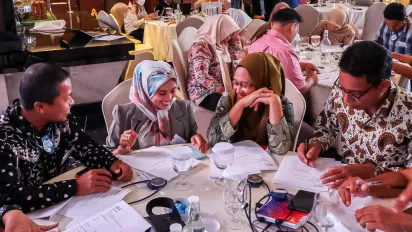
To better cope with shared challenges and tap into opportunities, it is crucial for South-East Asian countries and China to strengthen the sharing of their experiences, challenges and policy innovations. The Regional Policy Dialogue seeks to convene policymakers, experts, and stakeholders from South-East Asian countries and China to share strategies and experiences in promoting decent work.
This Dialogue is organized by the International Labour Organization (ILO) with the support of the Ministry of Human Resources and Social Security (MOHRSS) of the People's Republic of China. The event will explore policy innovations in areas such as national employment policies, governance of platform work, green entrepreneurship, and public employment services. It will also highlight the role of South-South and Triangular Cooperation (SSTC) in advancing high-quality and full employment.
Representatives of workers’ and employers’ organizations from South-East Asia and China will contribute their insights, ensuring a rich exchange of diverse experiences and best practices. The Dialogue will promote peer learning and foster multi-stakeholder partnerships that support ILO constituents in facing shared employment challenges and opportunities.
Objectives
The overall objective of the policy dialogue is to facilitate regional knowledge sharing collaboration on high-quality and full employment strategies amid the digital and green transitions and labour market uncertainty. Specifically, the dialogue will:
- Explore the implications of digitalization for employment.
- Promote green entrepreneurship and sustainable job creation.
- Identify opportunities for enhancing national employment policy frameworks.
- Strengthen public employment services.
- Leverage South-South and Triangular Cooperation to facilitate knowledge exchange on policy innovations.
By addressing these key areas, the Dialogue aims to contribute to more inclusive, resilient and equitable labour markets across South-East Asia.
Contact information
If you have any questions or require additional information about the event, please do not hesitate to contact the project at [email protected].
Relevant projects
Employment promotion and South-South and Triangular cooperation
Promoting the global development initiative with a focus on South-South cooperation in employment in ASEAN