


Three-part Zoom training series
Foreign Direct Investment (FDI) for more and better jobs: An ILO programme for members of the Caribbean Association of Investment Promotion Agencies (CAIPA)
The International Labour Organization (ILO), in collaboration with the Caribbean Association of Investment Promotion Agencies (CAIPA), is hosting a three-part online training series for CAIPA and its member investment promotion agencies (IPAs). The programme will explore how foreign direct investment (FDI) can contribute to more and better jobs, decent work and sustainable development across the Caribbean.
Background and context
Foreign direct investment can make an important contribution to economic and social development through the more effective use of capital, technology and labour. Maximizing these benefits, however, requires investment policies and enabling frameworks that help translate investment into inclusive growth and decent work. The ILO works with investment promotion agencies and their representative organizations to strengthen the connection between investment promotion, sustainable development and Sustainable Development Goal 8 – decent work and economic growth.
A key reference for this work is the ILO Tripartite Declaration of Principles concerning Multinational Enterprises and Social Policy (MNE Declaration). It provides guidance to enterprises, governments, and employers’ and workers’ organizations on promoting the positive contribution of business to economic and social progress and decent work. The MNE Declaration is the ILO instrument providing direct guidance to enterprises on social policy and inclusive, responsible and sustainable workplace practices.
Building on the ongoing partnership between the ILO and CAIPA, the training series responds to CAIPA members’ interest in strengthening their capacity to link investment attraction and facilitation with decent work outcomes. The programme will introduce the MNE Declaration, explore practical indicators for assessing the employment and decent work impacts of FDI, and support participating IPAs in identifying practical steps towards investment strategies that generate more and better-quality jobs.
What will participants gain?
Through these three series, participants will be able to:
- identify opportunities and challenges associated with FDI in advancing decent work and sustainable development;
- strengthen their understanding of the relevance of the ILO MNE Declaration to the work of IPAs;
- exchange examples of good practices for promoting investment that contributes to more and better-quality jobs;
- explore indicators for assessing the impact of FDI on decent work; and
- identify initial steps towards developing practical roadmaps for attracting and facilitating sustainable investment in the Caribbean.
The series is designed for representatives of CAIPA which spans the 24 countries that it covers as well as its 25 Member Investment Promotion Agencies.
Training schedule
Resources and supporting links

What is the ILO MNE Declaration?

Tripartite declaration of principles concerning multinational enterprises and social policy (MNE Declaration)
ILO Brief
Assessing the Impact of FDI on Decent Work - Exploring KPIs for Foreign Direct Investment Impact Assessment
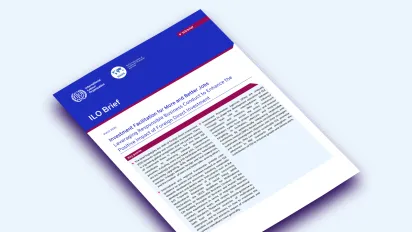
Research Brief
Investment facilitation for more and better jobs
ILO and WAIPA launch global platform to drive better jobs through responsible investment

Topic portal
Responsible business conduct