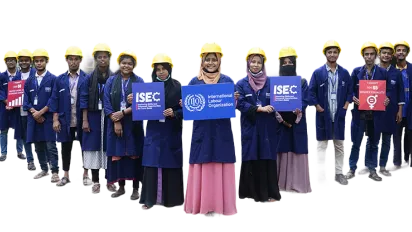
In a bid to address political concerns over labor market policies and legal systems in Bangladesh, the National Coordination Council for Workers Education (NCCWE) has collaborated with the International Labour Organization (ILO) to establish a groundbreaking project in Cox's Bazar. This project, titled "Improving Skills and Economic Opportunities for Bangladeshi Community and Rohingya Women and Youth" (ISEC), focuses on enhancing skills and enterprise development in the region. A recent consultative meeting between NCCWE, Workers Organizations, and ILO aimed to synergize efforts and establish collaborative mechanisms for effective project implementation.
Background
The NCCWE, comprising 12 significant national trade union federations, was formed with ILO's assistance to act as a forum for union and employee concerns. This body plays a pivotal role in addressing economic, social, and policy issues related to labor in Bangladesh. The ISEC project specifically aims to strengthen the Technical and Vocational Education and Training (TVET) governance structure, promote inclusive implementation of the national skills strategy, and deliver efficient and transparent skills development programs in Cox's Bazar.
Rationale
The rationale behind the project is to improve the delivery of market-driven portable skills, focusing on quality assurance, gender responsiveness, and social dialogue. The project aims to reduce skills mismatch through enhanced coordination among tripartite constituents and active participation of labor unions. The establishment of industry skills councils and Technical Advisory Committees is central to addressing skill gaps and aligning training programs with industry requirements.
Objectives
Establish district-level working committees of the NCCWE and identify Workers Organizations engaging with ILO in the ISEC project.
Identify collaborative areas with trade unions to promote effective social dialogue in skills development for Cox's Bazar.
Initiate an action plan through ILO's Cox Bazar project, aligning with trade unions' strategic action plans.
Support trade unions in representing employment, skills, and enterprise areas in Cox's Bazar, providing technical assistance for implementing the DWCP 2022-26.
Expected Outputs
The anticipated outputs from the consultative meeting included;
Forming a task team consisting of NCCWE and local trade union leaders to work closely with ILO Cox Bazaar program for effective social dialogue and issue resolution.
Identifying agreed areas and scope of work with trade unions to contribute to the Cox’s Bazar program through technical support and collaboration.
Defining key sets of annual/half-yearly activities to promote social dialogue for skills development and employment in Cox Bazar for the host community.
Agreeing on terms to engage women in trade unions and promoting the participation of women workers in non-traditional and formal sectors in Cox’s Bazaar.
The consultative meeting concluded with a comprehensive roadmap for collaboration and action, emphasizing the importance of social dialogue, skills development, and inclusive workforce engagement in Cox’s Bazar. The established objectives and expected outputs provide a clear framework for the successful implementation of the ISEC ILO Project in the region. The commitment demonstrated by NCCWE, Workers Organizations, and ILO sets a promising foundation for positive socio-economic development in Cox’s Bazar.