

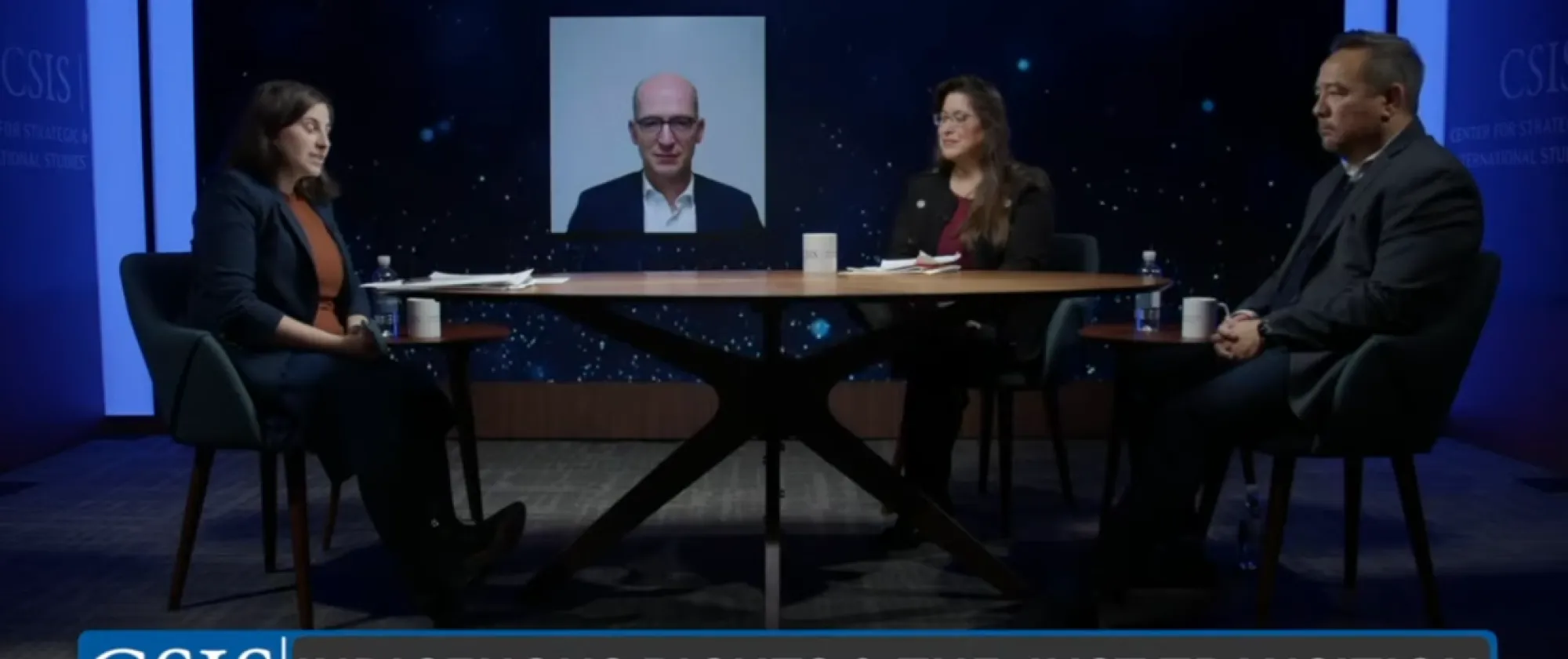
A CSIS and ILO Event
Consult and Cooperate in Times of Great Need: Indigenous Rights and Just Transition
This discussion aims to bring together experts in indigenous rights and critical minerals to discuss what real consultation and cooperation would look like and how human rights protections can play a vital role in the current critical minerals environment.
Washington, D.C., USA (ILO News) - On November14th, the Center for Strategic International Studies (CSIS) hosted a virtual event that highlighted the urgent need for inclusive cooperation on a Just Transition towards environmentally sustainable economies and societies." The panelists explored the critical role of Indigenous communities in achieving a sustainable and equitable future.
The panel featured Martin Oelz, Senior Specialist on Equality and Non-Discrimination at the ILO; Keith Harper, Former U.S. Ambassador to the UN Human Rights Council; and Vanessa Jimenz, Director of the Kawari Fund. Discussions centered on respecting Indigenous rights, fostering trust, and ensuring active participation in development and climate action.
Centering Indigenous Rights in the Just Transition
Former Ambassador Keith Harper opened the panel by emphasizing the need to honor the UN Declaration on the Rights of Indigenous Peoples, particularly the principle of free, prior, and informed consent (FPIC). Harper stressed that indigenous communities are not against development – they want a voice in shaping the decisions that affect their lands and livelihoods. Citing the Dakota Access Pipeline as a cautionary example, Harper warned of the consequences of ignoring FPIC.
"The climate crisis demands action, and Indigenous land is central to this," he said. "The question is: Do we proceed cooperatively and build relationships, or destructively and undermine trust?"
Indigenous Leadership in Carbon Markets and Energy Transition
Vanessa Jimenez highlighted the pivotal role of Indigenous communities in addressing climate change, particularly through global carbon markets. Indigenous lands account for 35% of the world's forests and hold significant natural resources essential for the energy transition. However, historical distrust and complex land ownership structures have hindered meaningful collaboration.
Jimenez called for deep respect for Indigenous customs and sacred lands, ensuring projects align with their values while fully considering environmental and social impacts. "The only way to address climate change and energy security concerns is through Indigenous peoples and their inclusiveness," she said. "'They have been at the forefront of climate change's adverse impacts and know better than anyone what's at stake."
ILO's Framework for Indigenous Rights
Martin Oelz detailed the ILO's longstanding commitment to Indigenous peoples through instruments, such as the Convention 169. He emphasized how the ILO's tripartite structure – bringing together governments, employers, and workers – facilitates dialogue that fosters trust, cooperation, and policy coherence.
While global frameworks are essential, Oelz stressed the responsibility of national governments to build infrastructure and policies that empower Indigenous communities. "This is not voluntary; this is critical for moving forward as a society that cares for protecting people and the planet," he said. "Rights are a part of that and cannot be eclipsed."
Moving Toward an Inclusive and Sustainable Future
The panel concluded with a call to action: ensuring Indigenous peoples have a seat at the table in shaping climate and development policies. Trust-building, systemic dialogue, and mechanisms at multiple levels are essential to creating economic opportunities that benefit Indigenous communities while safeguarding their rights, sovereignty, and cultural integrity.
As the world grapples with the twin challenges of climate change and social inequality, the inclusion of Indigenous voices is not only a matter of justice – it is indispensable to achieving a sustainable and equitable future for all.