

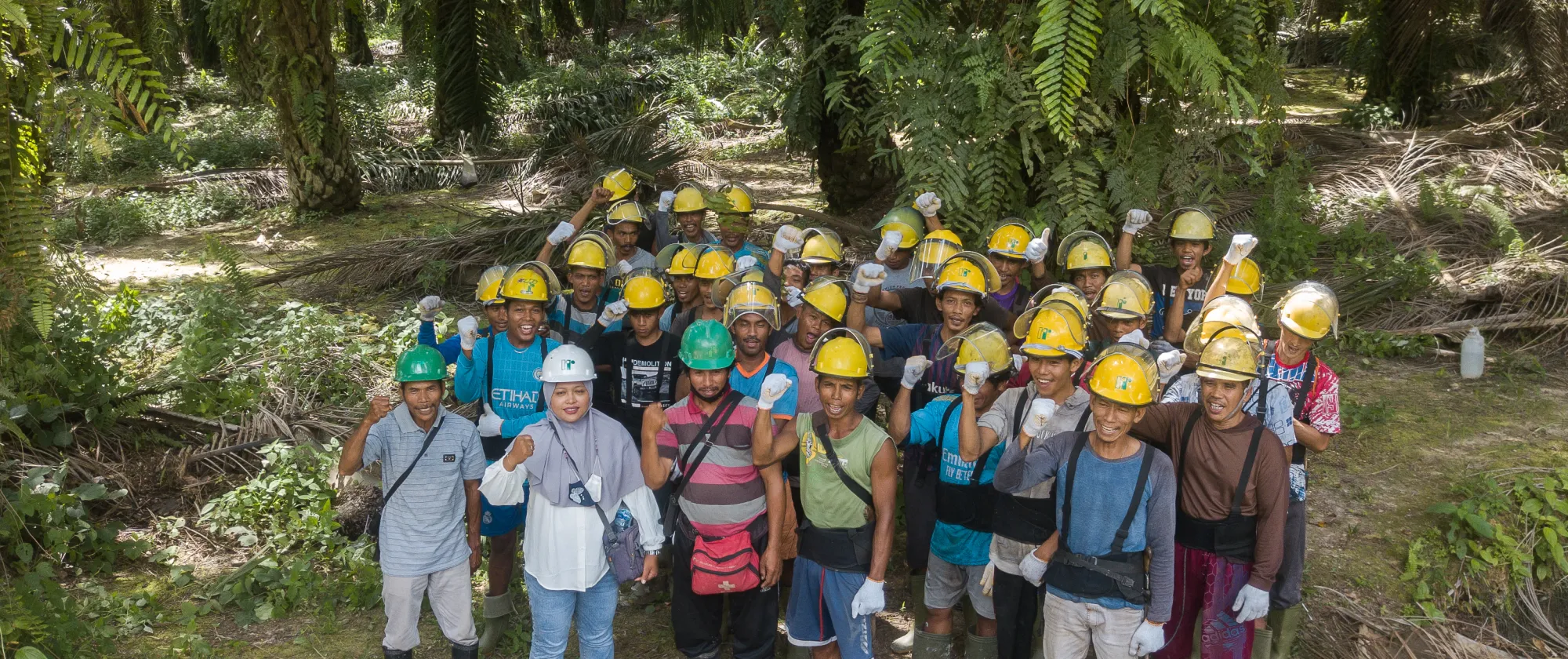
Improving Workers' Rights in the Rural Sectors of the Indo-Pacific
| When: | 1 December 2020 - 26 March 2025 |
|---|---|
| Development partner(s): | US Department of Labour (USDOL) |
| Project code: | RAS/20/07/USA |
The project “Improving workers’ rights in rural sectors of the Indo-Pacific with a focus on women” is funded by the US Department of Labor (US DOL) and implemented as part of the ILO flagship programme Safety + Health for All. It seeks to improve and sustain decent working conditions in rural sectors in the Philippines and Indonesia, especially for women workers.
Rural workers in the Indo-Pacific produce several commodities, including key export products. The project focuses on selected sectors: banana plantations, tuna processing, and (gold and nickel) mining in the Philippines; palm oil, fish processing and critical mineral industries in Indonesia. Besides, a regional component fosters the exchange of knowledge and good practices among the countries.
Background
Poor employment conditions are widespread in the Indo-Pacific rural economy, including high informality, low wages, long working hours, unsafe working conditions, and violence and harassment at work. Moreover, women workers in rural sectors are engaged disproportionately in the informal economy.
Objectives
The project seeks to address systemic flaws identified as root causes of the persistent decent work deficit in the participating countries and sectors. Thus, interventions aim at the following:
- Strengthening mechanisms and structures to support the implementation of national labour laws and policies with a focus on safety and health at work.
- Enhancing the capacity of workers’ and employers’ organizations to promote labour standards, including occupational safety and health (OSH) for workers in the most vulnerable conditions.
Project in Indonesia
Project in the Philippines
Funding is provided by the United States Department of Labor under cooperative agreement number IL‐35632-75-K. 100% of the total costs of the project is financed with federal funds, for a total of 11 million dollars. This material does not necessarily reflect the views or policies of the United States Department of Labor, nor does mention of trade names, commercial products, or organizations imply endorsement by the United States Government.
Project in Indonesia
Project in the Philippines