

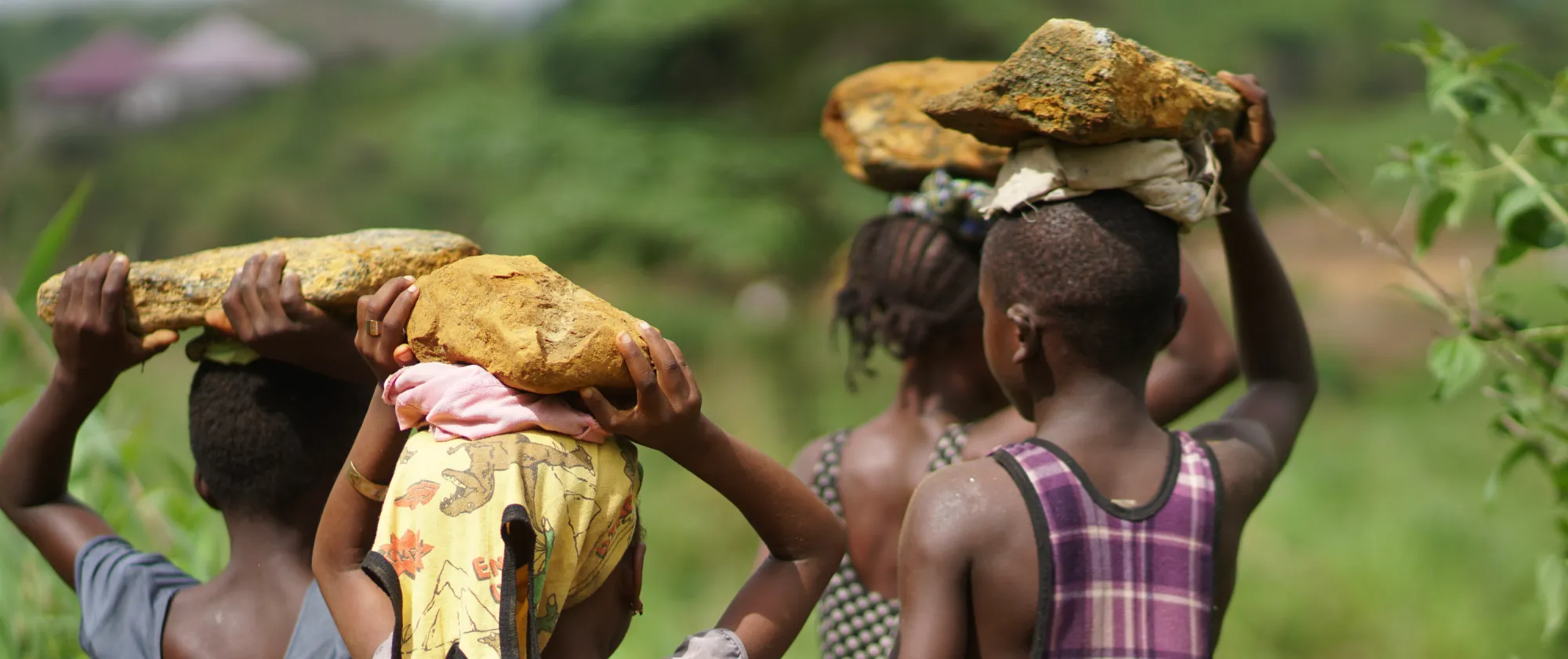
Methodology of the 2024 ILO-UNICEF Global Estimates of Child Labour
The Methodology of the 2024 ILO-UNICEF Global Estimates of Child Labour presents a rigorous statistical approach to measuring child labour globally, drawing on data from 107 countries. This report outlines the standardized definitions, data sources, and advanced modelling techniques used to generate reliable and comparable estimates. It explains how child labour is identified, measured, and imputed in countries lacking complete data, ensuring global coverage. Developed jointly by the ILO and UNICEF, the methodology supports evidence-based policymaking and monitoring of progress toward Sustainable Development Goal 8.7, which calls for the elimination of child labour in all its forms.
Methodology overview
The methodology underpinning the 2024 ILO-UNICEF Global Estimates of Child Labour is a robust, multi-layered approach designed to produce statistically sound and internationally comparable data on child labour across the globe. The estimates are grounded in the statistical framework established by the 18th International Conference of Labour Statisticians (ICLS) in 2008, ensuring consistency with previous editions and comparability over time.
Measurement framework
Child labour is defined using a combination of criteria: age, type of work, working conditions, and hours worked. The framework distinguishes between children in employment, child labour, and hazardous work. Employment includes any activity within the production boundary of the System of National Accounts (SNA), such as paid work, unpaid family work, and own-use production. Child labour includes employment below the minimum age, hazardous work. Hazardous work is defined by exposure to dangerous conditions, long hours (43+ per week), or work in hazardous industries and occupations. A comprehensive measure of child labour, also presented in the report, includes hazardous unpaid household services—such as intensive household chores that may endanger a child’s health, safety, or development.
Data sources
The estimates are based on data from 107 countries, covering approximately 60% of the global population of children aged 5–17. Sources include:
- Child Labour Surveys supported by the ILO
- Multiple Indicator Cluster Surveys (MICS) supported by UNICEF
- Labour Force Surveys
- Demographic and Health Surveys
These datasets vary in scope and age coverage, with efforts made to harmonize them for cross-country comparability.
Harmonization and imputation
To address gaps in data coverage, especially in countries lacking recent or complete surveys, the methodology employs a sophisticated imputation strategy. This involves:
- Econometric modelling: Six key indicators are modelled using linear regression techniques, including employment, child labour and hazardous work rates, and distributions by sector and school attendance.
- Cross-validation and LASSO: Model selection is guided by adaptive LASSO (Least Absolute Shrinkage and Selection Operator) and cross-validation to ensure predictive accuracy and avoid overfitting.
- Benchmark populations: Each model uses a logical benchmark (e.g., child labour as a proportion of children in employment) to maintain internal consistency.
- Age group interdependencies: Auxiliary regressions are used to impute missing data for specific age groups based on observed relationships across age categories.
Rebalancing and validation
After imputation, a multi-step rebalancing process ensures that estimates are logically consistent across age, sex, and regional breakdowns. For example, the number of children in hazardous work must not exceed those in child labour, and child labour must not exceed total employment. Distributions are adjusted to ensure that subcategories (e.g., school attendance) sum correctly to their benchmarks.
Evaluation of robustness
To assess the reliability of the estimates, a resampling approach was used. The modelling procedure was repeated 150 times, each time excluding a random subset of countries. The resulting standard deviations and coefficients of variation indicate strong robustness, particularly in regions with high data coverage.
Related content

Joint ILO-UNICEF report
Child Labour: Global estimates 2024, trends and the road forward