

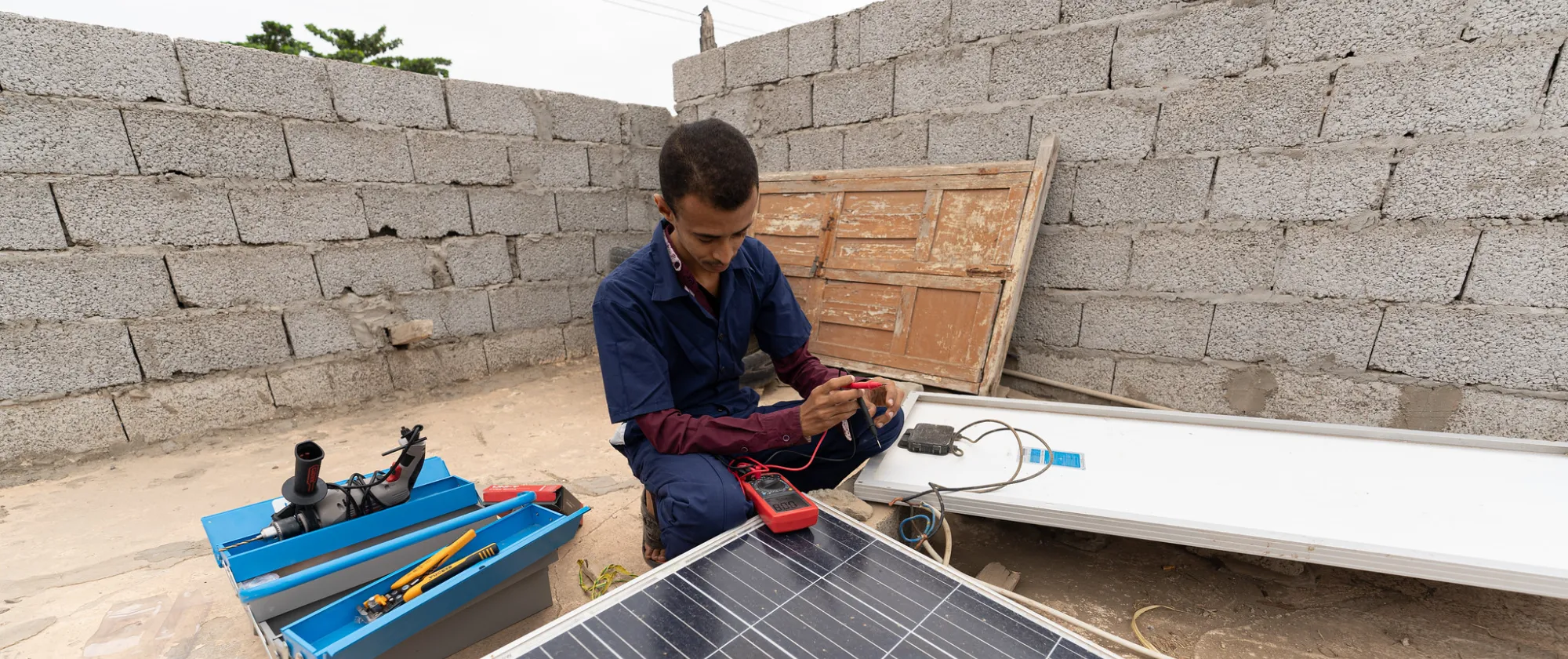
Capacity building activities on just transition finance for key strategic partners in the financial ecosystem in Morocco
Climate change represents a major challenge for Morocco, which is facing increasing risks such as water shortages, desertification, and rising temperatures. At the same time, greenhouse gas emissions have also increased significantly in Morocco over the past decade. In response, the country has developed ambitious climate policies, notably through its Nationally Determined Contribution under the Paris Agreement. Morocco has prioritized renewable energy, particularly solar, wind, and green hydrogen, and seeks to decarbonize other key sectors of its economy, including the phosphate industry and the agricultural sector.
The shift to a climate-resilient and low-carbon economy demands substantial and well-aligned investment. This includes addressing both environmental and social financing needs across the real economy, mobilizing resources from both public and private sectors. Therefore, the Moroccan financial sector plays a vital role in directing investment toward an inclusive and climate-aligned transformation and ensuring that financial flows benefit a broad range of economic actors while advancing national climate goals.
In recent years, Morocco has taken steps to integrate sustainable finance into its development model, with strategic initiatives such as the Climate Finance Development Strategy to 2030, which aims to structure and mobilize capital through innovative financial instruments.
In support of this agenda, the ILO’s Social Finance Programme, in collaboration with the ILO Country Office for Morocco and with financial support from the Flemish Government under the Green Jobs for Youth project, implements a capacity-building programme on Just Transition Finance. The initiative aims to equip financial sector stakeholders with the knowledge and tools to better integrate just transition principles into banking, underwriting, and investment activities.
The programme combines analytical research, targeted stakeholder engagement and capacity development activities. Key activities include:
- An assessment of climate transition dynamics in Morocco to identify the most affected sectors and economic activities, related social impacts, and nationally driven just transition priorities complemented by a mapping of financial sector actors serving these affected sectors, public incentive mechanisms, and private sector financing needs and gaps associated with a just transition.
- Targeted capacity-building workshop engaging key stakeholders within the financial sector ecosystem aiming to strengthen understanding of the sector’s potential contribution to the national just transition agenda, identify opportunities and means for facilitating and financing a transition that promotes social equity and inclusion, highlight local just transition-related financing.
- Technical assistance to a strategically positioned financial institution.
Related content

Just Transition Finance Hub
Related areas of work