

Living wages
Achieving social justice through living wages: Collaborative efforts and challenges
This two-day event, building on the ILO conclusions from the Meeting of experts on wage policies, including living wages, aimed at learning from the experiences of governments, social partners and living wage initiatives in estimating and operationalizing living wages.
9 June 2025
The global event Operationalizing Living Wages, organized by the International Labour Organization (ILO) under the Global Coalition for Social Justice on 28-29 April 2025, brought together diverse group of stakeholders, including representatives from governments, employers’ and workers’ organizations, living wage initiatives, civil society organizations, and the private sector.
Day 1: From Principles to Practice: Advancing Living Wages Through Social Dialogue
The event commenced with a high-level panel discussing the ILO Conclusions on from the Meeting of experts on wage policies, including living wages, highlighting the essential role living wages play in addressing poverty, income inequality, and advancing social justice. The panel emphasized that operationalizing living wages involves collaboration among diverse actors and acknowledged the importance of aligning various living wage initiatives with ILO principles. It was agreed that any sustainable strategy to promote living wages should be anchored at the national level, reflecting local realities and economic conditions.
The subsequent panel addressed the principles for estimating living wages, underlining the importance of evidence-base, transparent, public available, regularly adjusted and gender-responsive methodologies. Participants stressed that consultation with representative employers’ and workers’ organizations is central to validating living wage estimates and ensuring their national ownership. The need for simplified and standardized frameworks to avoid overly granular estimates was also recognized.
Discussions on the economic factors and root causes of low pay emphasized addressing low productivity, informality and sector-specific challenges. The importance of adequate wage policies that reflect local economic realities, as well as the need for measures aimed at raising productivity through investments in human capital and technology was highlighted. Panellists underscored that improving wages contributes significantly to reducing inequality, enhancing quality of life, and fostering economic growth.
The role of wage-setting institutions was explored through panels focusing separately on statutory minimum wages and collective bargaining. Experiences from Costa Rica, Ethiopia, and Vietnam illustrated different national approaches and underscored the critical role of social dialogue. Social dialogue and collective bargaining emerged as crucial mechanisms to operationalize living wages.
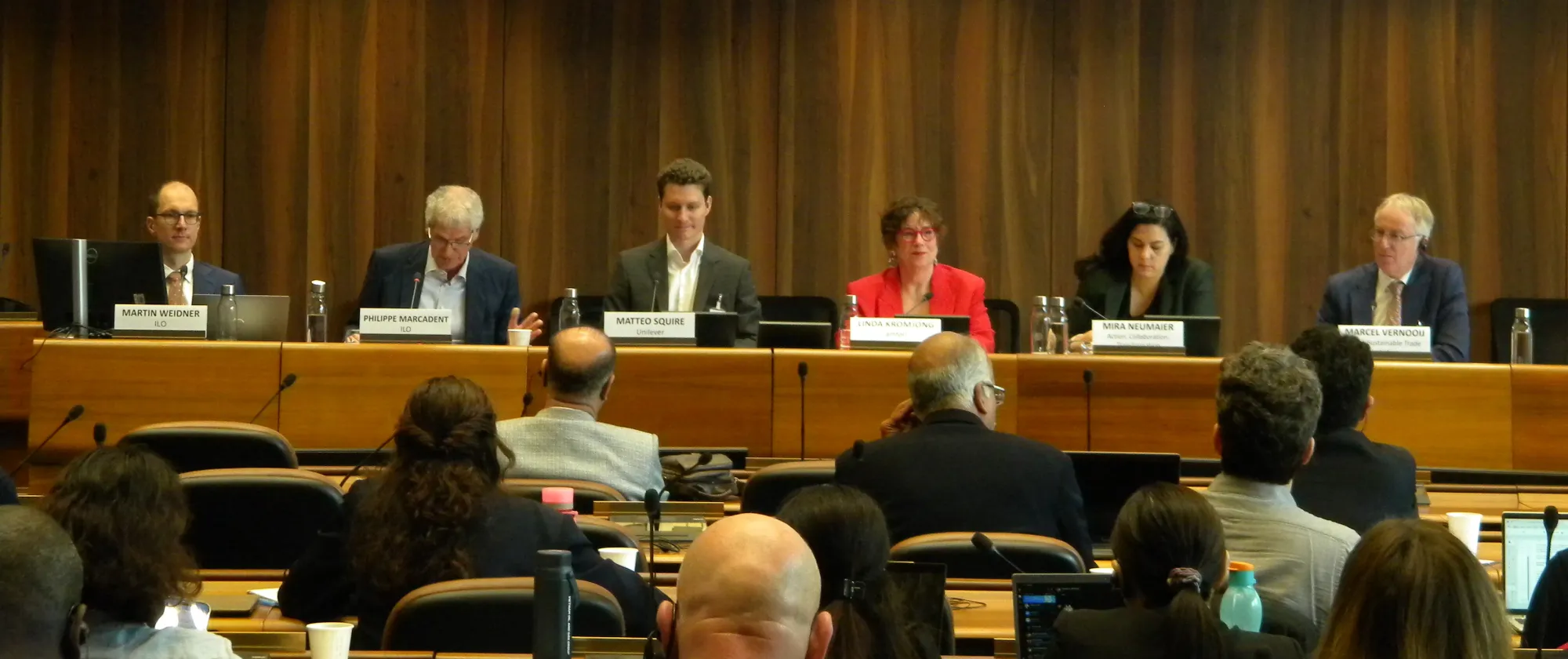
Private sector perspectives and multi-stakeholder initiatives underscored the essential role of businesses and collaborative partnerships in operationalizing living wages. Companies like Unilever, organizations like Amfori and Responsible Business Alliance (RBA), and initiatives such as Action, Collaboration, Transformation (ACT) and IDH highlighted their ongoing efforts and challenges in the operationalization of living wages, particularly at the supply chain level, and the need for unified and robust multi-stakeholder cooperation. It was clear that significant collaboration and transparency are required to align market pressures with wage-setting efforts, emphasizing collective action as key to sustainable solutions.
Day 2: Implementing Adequate Wage Projects
Day two presented the ILO’s projects on setting adequate wages and their work on operationalising living wages, as well as the Living Wage Initiative under the Global Coalition for Social Justice, discussing its objectives, overall ambition, and the way forward.
The Setting Adequate Wages(SAW) project panel emphasized the role of the SAW project, funded by the Netherlands, in supporting wage-setting processes that promote a decent standard of living for workers and their families while also supporting the sustainability of the enterprises that employ them. Panellists from the Netherlands, India, Costa Rica, and Côte d’Ivoire discussed how the project contributes to reinforcing wage-setting mechanisms with the aim of advancing the goal of promoting wages that guarantee a fair share of the benefits of progress for all.
The Setting Adequate Wages: A Focus on Agriculture (SAW-A) panel further explored the specific challenges and opportunities associated with wage-setting in the agricultural sector. Experiences from Ethiopia, Colombia, and Côte d'Ivoire underscored the importance of complementing the efforts to operationalize living wages with measures that promote the transition to the formal economy, strengthen social protection systems, and improve workers’ access to international markets and fair income distribution.
The concluding panel reinforced the importance of fostering complementarities and synergies to advance the living wage agenda. It introduced the new ILO Living Wage Programme, outlining its core objectives. Panellists advocated for integrating ILO living wage principles into national wage-setting mechanisms , including statutory minimum wages and collective bargaining processes.
Closing Remarks
In closing, participants emphasized living wages as central to economic and social development and in advancing social justice. The Global Coalition for Social Justice was recognized as instrumental for fostering collaboration and political commitment. Ongoing efforts will focus on practical, localized solutions, robust social dialogue, and multi-stakeholder cooperation to ensure living wages move from principles to practice globally.