

Ethiopia Validates Social Protection Data Using ILO’s Social Security Inquiry Tool
Advancing national efforts to coordinate and monitor social protection systems through improved data accuracy and institutional ownership.
23 June 2025
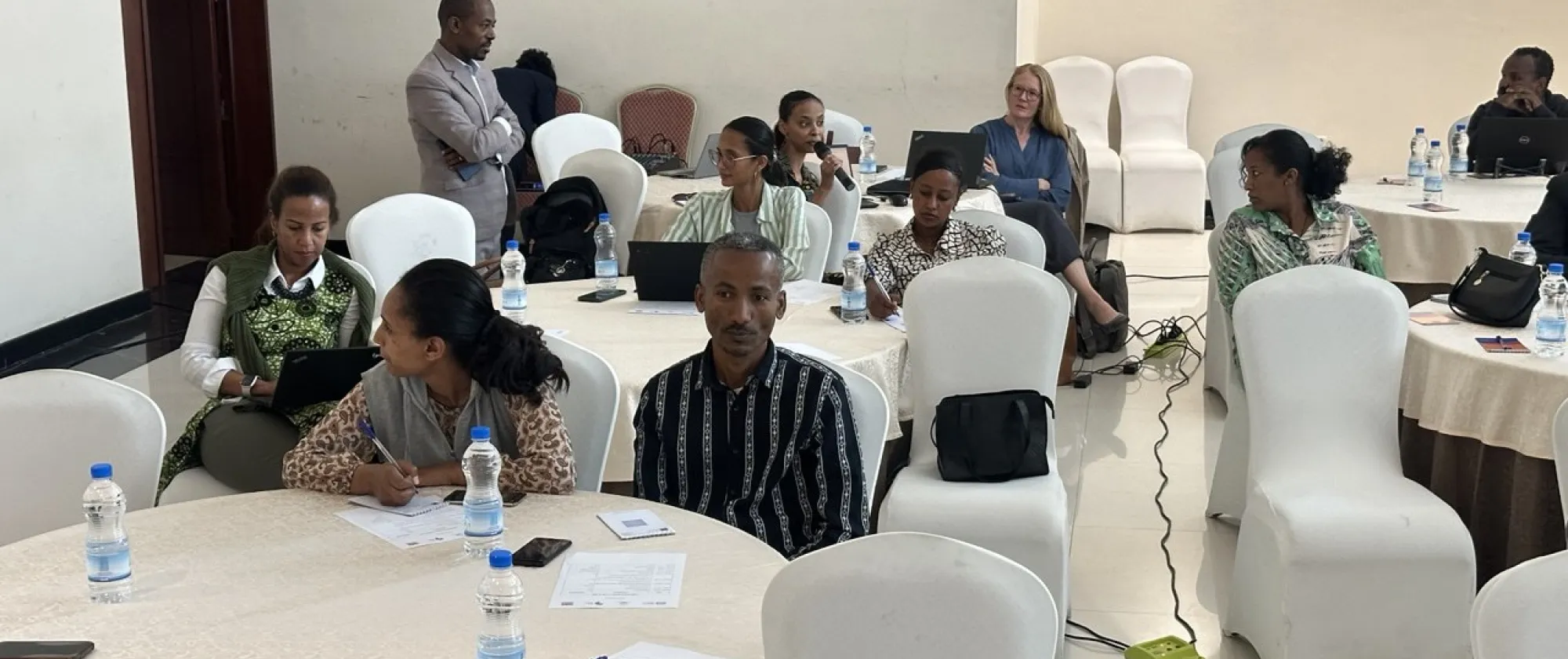
The International Labour Organization (ILO), in collaboration with Ethiopia’s Ministry of Women and Social Affairs (MoWSA), organized a validation workshop on 17 March 2025 in Addis Ababa to present and review newly updated data on social protection coverage in Ethiopia. Conducted under the ILO’s Better Regional Migration Management (BRMM) programme funded by the UK Foreign, Commonwealth and Development Office (FCDO), the session focused on advancing national efforts to coordinate and monitor social protection systems through improved data accuracy and institutional ownership.
The ILO supported the Ethiopian government in updating and validating national-level data using the Social Security Inquiry (SSI) tool. This globally recognized tool compiles comprehensive statistics on social protection coverage, revenue, and expenditure and supports SDG 1.3.1 monitoring. With support from a national consultant and technical staff, the workshop engaged 28 participants from government agencies, development partners, and UN bodies. The discussions reflected a strong consensus on the importance of improving coordination and consistency in data systems and addressing coverage gaps, particularly for vulnerable populations.
One of the key outcomes was the validation of the fact-finding report, which used the SSI tool to analyze the status of social protection in Ethiopia. Data collected showed that public and private social protection schemes had jointly accumulated 350 billion ETB in revenue, with public schemes accounting for 305 billion ETB. Social protection expenditure was noted to have increased to approximately 2.8% of GDP, with notable improvements seen in the implementation of programmes such as the Productive Safety Net Programme. Although Ethiopia has made progress, the SSI findings pointed to continued challenges in coverage, particularly among informal sector workers, returned migrants, and conflict-affected communities.
Participants emphasized the need to institutionalize the SSI tool within MoWSA to streamline data collection, avoid duplication, and ensure long-term ownership of national social protection statistics. The discussion highlighted existing fragmentation in the country’s schemes, ranging from contributory systems to non-contributory interventions such as fee waivers, community health insurance, and urban and rural safety nets. While these programmes exist, they are often poorly integrated, reducing their effectiveness in reaching the most vulnerable.
Feedback from development partners and stakeholders included calls for further data disaggregation by region and by demographic indicators such as age and gender. The need to include detailed data on maternity protection, unemployment, and returnees was repeatedly raised. Participants also emphasized the importance of adopting digital tools and centralized systems to facilitate real-time data access and reduce inconsistencies.
Representatives from the World Bank, GIZ, IOM, CETU, EHIA, and UNHCR highlighted the relevance of the SSI data in informing policy revisions and planning processes. The World Bank specifically called for improved data clarity around contributory and non-contributory schemes, while UNHCR and UNICEF stressed the importance of including data on refugees and ensuring data harmonization across overlapping programmes.
The meeting concluded with commitments from both ILO and MoWSA to integrate the workshop recommendations into the final version of the fact-finding report. The Ministry pledged to host the updated findings on its website and use the data to inform upcoming policy revisions. The consultant leading the exercise will revise the report based on stakeholder feedback and finalize it for publication.
This validation process not only reaffirmed the ILO’s role in supporting Ethiopia’s social protection monitoring but also set a foundation for more evidence-based policy development. The integration of the SSI tool within Ethiopia’s national systems will contribute to better planning, efficient resource allocation, and improved coordination across government and development actors, ensuring that social protection reaches the people who need it most.
Relevant projects

East and Horn of Africa
Better Regional Migration Management