

Collaboration for improved Labour Migration Governance
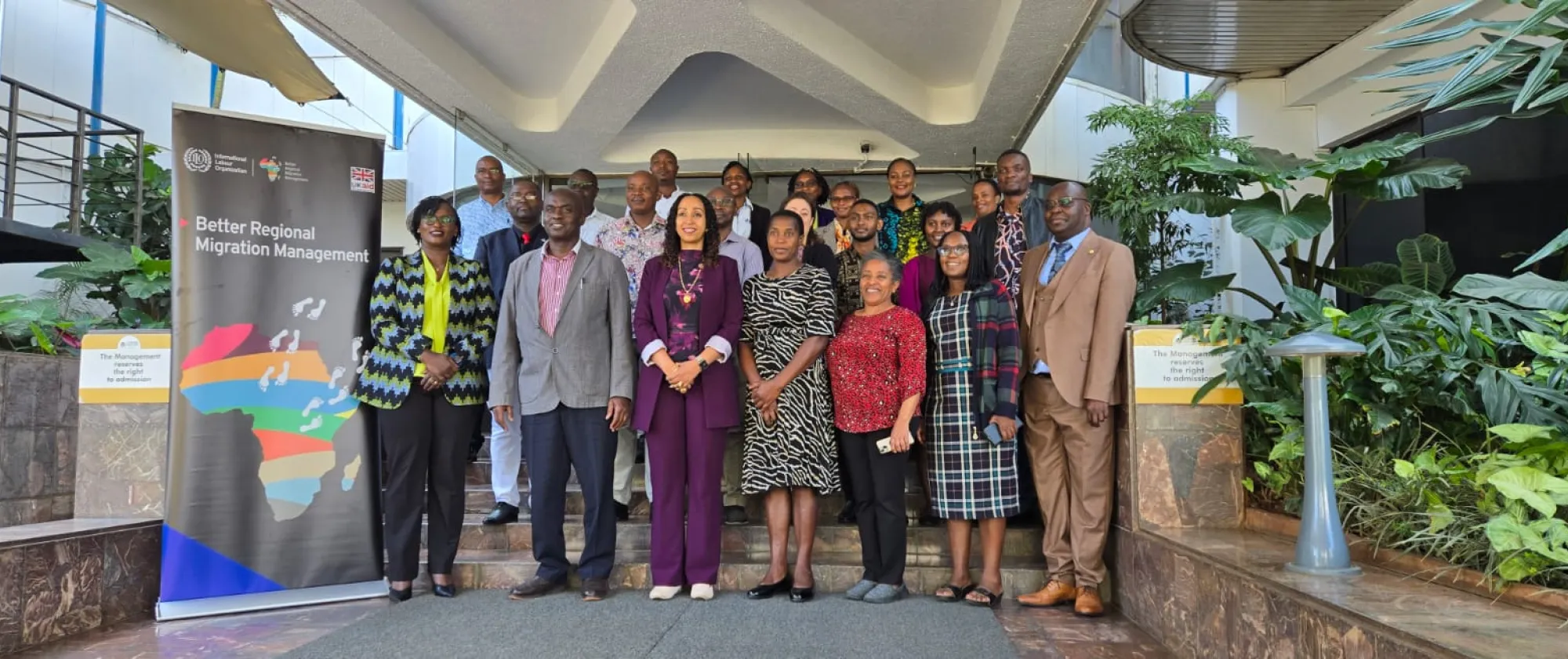
4th Technical Working Group meetings in Kenya, Uganda, South Sudan, Somalia, and Djibouti for improved collaboration on labour migration at national level.
24 June 2025
The International Labour Organization (ILO), through the Better Regional Migration Management (BRMM) Programme, funded by the UK Foreign, Commonwealth and Development Office (FCDO) conducted its 4th Technical Working Group meetings in Kenya, Uganda, South Sudan, Somalia, and Djibouti for improved collaboration on labour migration at national level. The meetings served as platforms for national stakeholders to assess progress, address challenges, and propose actionable steps to enhance policy frameworks, skills development, data systems, and social protection for migrant workers. With the BRMM programme approaching its conclusion, discussions centred on sustainability and integrating key initiatives into national labour migration strategies.
In Kenya, the 4th TWG focused on strengthening institutional mechanisms to support migrant workers, particularly through the establishment of the Kenya Migrant Workers Welfare Fund. Stakeholders agreed on finalizing the operational framework and ensuring that the fund is properly structured to provide social protection, repatriation assistance, and financial support for migrants. The TWG also reviewed progress in implementing the Skills Verification Program (SVP) with Saudi Arabia and affirmed commitments to expand partnerships with additional destination countries. The meeting underscored the importance of continued engagement with private employment agencies to enhance fair recruitment practices and ensure compliance with international labour standards.
Uganda’s 4th TWG addressed key gaps in labour migration governance, particularly in data collection and policy alignment. The government committed to finalizing the Labour Market Information System (LMIS) to provide accurate data for evidence-based policymaking. Stakeholders emphasized the need to expedite negotiations of new Bilateral Labour Migration Agreements (BLMAs) to diversify destination countries for Ugandan migrant workers. The review of the Employment Act and regulations was prioritized to align with emerging labour market trends and international standards. The TWG also reinforced the role of financial institutions in supporting returning migrants through tailored reintegration programs, including access to micro-loans and skills training.
In South Sudan, the 4th TWG focused on the finalization of the Labour Migration Policy and the development of an action plan to operationalize its key components. Participants agreed on the need to establish a Migrant Resource Centre (MRC) to provide pre-departure training, legal support, and financial literacy education to migrant workers. Efforts were also directed toward strengthening union-to-union agreements between South Sudan and neighbouring countries to improve labour protections and facilitate safe migration pathways. The government committed to fast-tracking the adoption of new regulations on private employment agencies and enhancing coordination mechanisms between state and national authorities to address irregular migration and trafficking concerns.
Somalia’s 4th TWG prioritized the formalization of labour migration governance structures, focusing on the completion of the National Labour Migration Policy and implementation plan. Stakeholders reviewed progress in developing regulations for private employment agencies and called for their swift adoption to regulate recruitment processes and minimize exploitation risks. The meeting also highlighted the need for strengthened social protection for migrant workers, particularly through cross-border cooperation with Ethiopia and other key labour migration partners. Participants emphasized the role of skills partnerships in enhancing employability and agreed to advance discussions on skills recognition mechanisms with Gulf countries.
Djibouti’s 4th TWG centred on the operationalization of the country’s Labour Market Information System (LMIS) and the finalization of the Labour Migration Strategy. The government reaffirmed its commitment to the ratification of Convention 181 on Private Employment Agencies to ensure ethical recruitment and fair employment practices. Stakeholders also discussed the integration of migrant workers into the national social protection system and committed to enhancing data collection mechanisms to improve labour migration oversight. The TWG reinforced the importance of regional cooperation through IGAD and COMESA frameworks to address common challenges and foster labour mobility within the region.
Across all five TWGs, a consistent priority was the need for sustained collaboration among government agencies, social partners, private sector actors, and development partners to ensure the continuity of BRMM-supported initiatives. Governments committed to institutionalizing TWGs as permanent consultation platforms to oversee labour migration governance beyond the project’s lifespan. Stakeholders agreed on the importance of leveraging regional economic communities to align national labour migration policies with broader continental frameworks. Moving forward, countries will focus on embedding BRMM achievements into national policies, strengthening social protection systems, and expanding legal pathways for labour migration to maximize the benefits of safe, orderly, and regular migration.
Relevant projects

East and Horn of Africa
Better Regional Migration Management